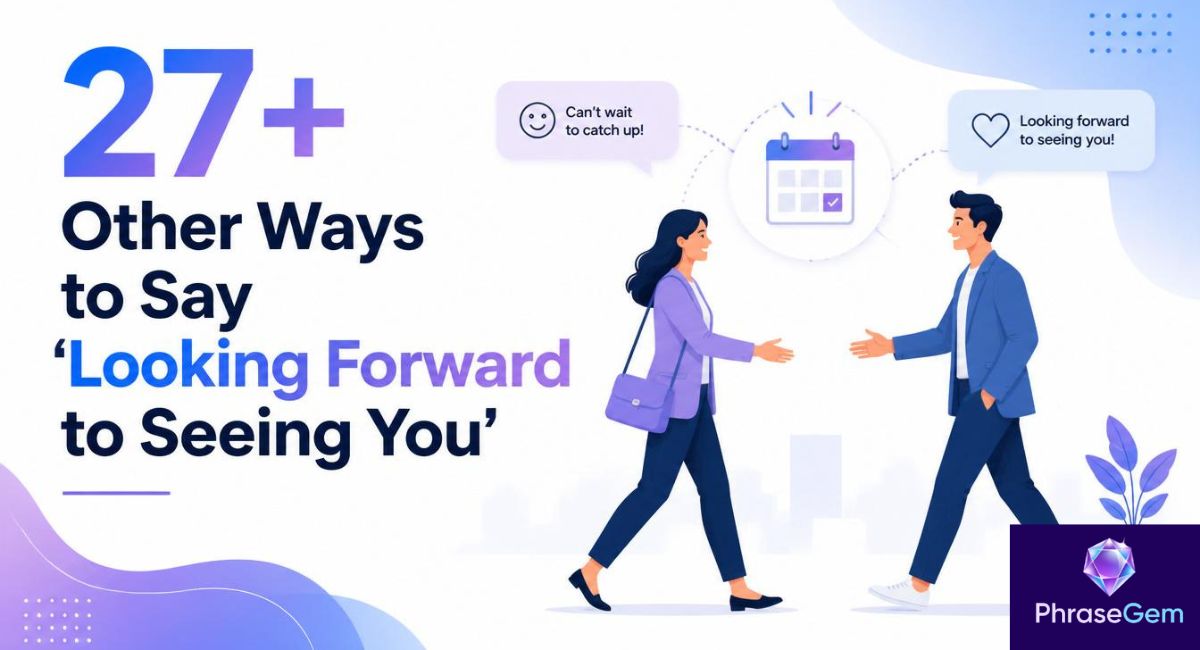
Typing “looking forward to seeing you” for the fifth time in the same week starts to feel embarrassing, even you can tell it’s on autopilot. From wrapping up a job interview email to saying goodbye after a family lunch or closing out a client meeting, this one phrase does all the heavy lifting. And when it shows up that often, it stops feeling warm and starts feeling copy-pasted.
This article gives you 27+ fresh alternatives to “looking forward to seeing you,” sorted by tone and situation, whether you need something professional, casual, or heartfelt. Pick the right one, and your message will leave an impression instead of blending into someone’s inbox like every other email they ignored.
What Does ‘Looking Forward to Seeing You’ Mean?
It simply means you’re excited or happy about meeting someone soon.
You’re letting them know their company matters to you. It’s a warm, friendly way to close a message or wrap up a conversation.
When Should You Use These Alternatives?
Sometimes the original phrase can feel overused or too generic. Here are the common situations where a fresh alternative works better:
- When writing a formal email, and you want to sound more professional
- When texting a close friend and you want something fun or casual
- When you’ve already used the phrase earlier in the same message
- When you want your words to feel more personal and thoughtful
The right alternative depends on your tone, your relationship with the person, and the platform you’re using.
Is It Professional to Say ‘Looking Forward to Seeing You’?
Yes, it is. It’s polite, warm, and widely accepted in professional settings.
Most people use it in work emails, meeting confirmations, and business conversations without any issue.
27+ Other Ways to Say “Looking Forward to Seeing You”
1. “I Look Forward to Meeting You.”
Meaning: You’re excited to meet someone for the first time politely and professionally.
Tone: Formal and respectful
Tip: Best used when you haven’t met the person yet, like before a job interview or a first client call.
Do’s and Don’ts:
- Do use it in professional emails and formal introductions
- Do pair it with a specific reason or context
- Don’t use it with someone you already know well
- Don’t use it in casual texts or informal chats
Examples:
- “Thank you for reaching out. I look forward to meeting you next Monday.”
- “It was great speaking with you. I look forward to meeting you at the conference.”
- “I look forward to meeting you and the rest of the team.”
- “Please let me know if the time works. I look forward to meeting you.”
- “I look forward to meeting you in person after all these emails.”
2. “I’m Excited to See You.”
Meaning: You’re genuinely happy and enthusiastic about seeing someone soon.
Tone: Warm, casual, and personal
Tip: Works best with friends, family, or close colleagues. It adds a personal and emotional touch.
Do’s and Don’ts:
- Do use it with people you share a close bond with
- Do use it when you haven’t seen someone in a while
- Don’t use it in formal business emails
- Don’t overuse it or it may lose its sincerity
Examples:
- “It’s been so long. I’m excited to see you this weekend!”
- “I’m excited to see you at the reunion next week.”
- “Just booked my ticket. I’m so excited to see you soon.”
- “I’m excited to see you and catch up over coffee.”
- “The kids are excited to see you too. See you Friday!”
3. “I Look Forward to Our Meeting.”
Meaning: You’re prepared and eager for a scheduled meeting or discussion.
Tone: Professional and confident
Tip: Use this in business or work settings when confirming a scheduled meeting.
Do’s and Don’ts:
- Do use it to confirm meetings and appointments
- Do keep it concise in email sign offs
- Don’t use it in casual conversations
- Don’t use it if no meeting has been scheduled yet
Examples:
- “Thank you for scheduling the call. I look forward to our meeting.”
- “I look forward to our meeting on Thursday at 3 PM.”
- “Please bring the project files. I look forward to our meeting.”
- “I look forward to our meeting and hearing your thoughts.”
- “I look forward to our meeting and finding a solution together.”
4. “I Can’t Wait to See You.”
Meaning: You’re very eager and a little impatient to see someone because you’re so excited.
Tone: Casual, enthusiastic, and emotional
Tip: Great for personal messages, especially with close friends or romantic partners.
Do’s and Don’ts:
- Do use it when emotions are high and the moment feels special
- Do use it in texts and personal notes
- Don’t use it in professional or work emails
- Don’t use it with someone you’ve just met
Examples:
- “Only three more days. I can’t wait to see you!”
- “I can’t wait to see you at the airport tomorrow.”
- “I can’t wait to see you and give you the biggest hug.”
- “I can’t wait to see you and finally catch up properly.”
- “I can’t wait to see you at the wedding. It’ll be so fun!”
5. “I’m Looking Forward to Our Time Together.”
Meaning: You value the upcoming time you’ll spend with someone, and you’re genuinely excited about it.
Tone: Warm, sincere, and slightly formal
Tip: Works well for both professional and personal use when you want to sound thoughtful.
Do’s and Don’ts:
- Do use it for planned hangouts, trips, or meaningful meetings
- Do use it when you want to show appreciation
- Don’t use it for very short or routine interactions
- Don’t use it if the tone of your message is already too casual
Examples:
- “I’m looking forward to our time together at the workshop.”
- “It’s going to be a great trip. I’m looking forward to our time together.”
- “I’m looking forward to our time together and everything we have planned.”
- “I’m really looking forward to our time together this holiday season.”
- “I’m looking forward to our time together at the retreat next month.”
6. “I Look Forward to Seeing You Soon.”
Meaning: A classic and polite way of saying you expect to see someone in the near future.
Tone: Neutral, polite, and versatile
Tip: One of the safest phrases to use in almost any setting, formal or informal.
Do’s and Don’ts:
- Do use it to close emails or messages professionally
- Do use it when you’re not sure of the exact date
- Don’t use it when you already know the exact date (be more specific)
- Don’t repeat it too many times in the same message
Examples:
- “Great catching up over the phone. I look forward to seeing you soon.”
- “Thanks for the invite. I look forward to seeing you soon.”
- “It’s been too long. I look forward to seeing you soon.”
- “I look forward to seeing you soon and discussing the next steps.”
- “Please give my regards to the team. I look forward to seeing you soon.”
7. “I’m Eager to See You.”
Meaning: You’re enthusiastic and genuinely motivated to meet or see someone.
Tone: Formal with a hint of warmth
Tip: Works well in professional settings when you want to show enthusiasm without sounding too casual.
Do’s and Don’ts:
- Do use it in cover letters, formal emails, or client messages
- Do use it when you want to sound motivated and engaged
- Don’t use it in very casual conversations since it may sound stiff
- Don’t confuse eagerness with impatience in your tone
Examples:
- “I’m eager to see you and discuss the proposal in detail.”
- “I’m eager to see you at the annual summit this year.”
- “After reading your work, I’m eager to see you at the seminar.”
- “I’m eager to see you and learn more about your new project.”
- “I’m eager to see you and get started on this collaboration.”
8. “I Look Forward to Connecting with You.”
Meaning: You’re looking forward to building or continuing a professional or personal connection.
Tone: Professional and networking friendly
Tip: Perfect for LinkedIn messages, networking events, or new professional relationships.
Do’s and Don’ts:
- Do use it when meeting someone for the first time professionally
- Do use it in networking and outreach messages
- Don’t use it with close friends as it sounds too corporate
- Don’t use it repeatedly in the same conversation
Examples:
- “I look forward to connecting with you at the industry event.”
- “Thank you for accepting my request. I look forward to connecting with you.”
- “I look forward to connecting with you and exploring ways to collaborate.”
- “I look forward to connecting with you over a virtual coffee soon.”
- “I look forward to connecting with you and your amazing team.”
9. “I’m Happy We’ll Be Meeting.”
Meaning: You’re genuinely pleased that the two of you have made plans to meet.
Tone: Friendly and positive
Tip: Use this when you want to show that the meeting itself means something to you personally.
Do’s and Don’ts:
- Do use it to make the other person feel welcome and valued
- Do use it after confirming a meeting or plan
- Don’t use it in very formal or high stakes business settings
- Don’t use it before a meeting has actually been confirmed
Examples:
- “I’m happy we’ll be meeting this Thursday. Looking forward to it.”
- “I’m happy we’ll be meeting and finally putting faces to names.”
- “I’m happy we’ll be meeting at the event. See you there.”
- “I’m happy we’ll be meeting after all the back and forth emails.”
- “I’m happy we’ll be meeting soon. It’s been way too long.”
10. “I Look Forward to Seeing You in Person.”
Meaning: You’re especially excited to meet face to face after communicating digitally or being apart.
Tone: Warm and sincere
Tip: Best used after a period of virtual or remote communication, like after a long project over emails or video calls.
Do’s and Don’ts:
- Do use it after months of remote work or online communication
- Do use it when the in person meeting feels special or meaningful
- Don’t use it if you see the person regularly
- Don’t use it in a message that’s already too long or formal
Examples:
- “After all these Zoom calls, I look forward to seeing you in person.”
- “I look forward to seeing you in person at the conference next week.”
- “We’ve talked so much online. I look forward to seeing you in person.”
- “I look forward to seeing you in person and working side by side.”
- “I look forward to seeing you in person and celebrating together.”
11. “I’m Glad We’ll See Each Other Soon.”
Meaning: You feel relieved and happy that you’ll be meeting up soon.
Tone: Casual and heartfelt
Tip: Great for reconnecting with old friends or family after a long time apart.
Do’s and Don’ts:
- Do use it to express genuine happiness about a planned meetup
- Do use it in personal messages and informal emails
- Don’t use it in formal business communication
- Don’t use it if the meeting is still uncertain or unconfirmed
Examples:
- “I’m glad we’ll see each other soon. It feels like forever!”
- “I’m glad we’ll see each other soon at the family dinner.”
- “I’m glad we’ll see each other soon and finally catch up.”
- “So much to tell you. I’m glad we’ll see each other soon.”
- “I’m glad we’ll see each other soon before you move away.”
12. “I Look Forward to Catching Up with You.”
Meaning: You’re excited to reconnect and share updates after time apart.
Tone: Friendly and relaxed
Tip: Works perfectly when you haven’t seen someone in a while and want to have a real conversation.
Do’s and Don’ts:
- Do use it with old friends, former colleagues, or family
- Do use it when there’s a lot to talk about
- Don’t use it with someone you speak to every day
- Don’t use it in very formal or corporate email sign offs
Examples:
- “It’s been months! I look forward to catching up with you.”
- “I look forward to catching up with you over lunch next week.”
- “I look forward to catching up with you and hearing all your news.”
- “I look forward to catching up with you at the alumni meetup.”
- “I look forward to catching up with you. So much has changed!”
13. “I’m Pleased to Be Meeting You.”
Meaning: You feel honored or genuinely happy about the upcoming meeting.
Tone: Formal and respectful
Tip: Use this when meeting someone of higher authority, a client, or a respected professional.
Do’s and Don’ts:
- Do use it in formal introductions and professional settings
- Do use it when you want to show respect and courtesy
- Don’t use it in casual or everyday conversations
- Don’t use it if it doesn’t match the overall tone of your message
Examples:
- “I’m pleased to be meeting you at the board presentation.”
- “I’m pleased to be meeting you and your team this Friday.”
- “After hearing so much about your work, I’m pleased to be meeting you.”
- “I’m pleased to be meeting you at this year’s leadership summit.”
- “I’m pleased to be meeting you and discussing future opportunities.”
14. “I’m Looking Forward to Seeing Everyone.”
Meaning: You’re excited to meet or reunite with a whole group of people, not just one person.
Tone: Warm, inclusive, and enthusiastic
Tip: Perfect for group events, team gatherings, reunions, or parties.
Do’s and Don’ts:
- Do use it in group chats, event RSVPs, or team emails
- Do use it when addressing a crowd or multiple people at once
- Don’t use it when speaking to just one person
- Don’t use it if only a few people are attending
Examples:
- “It’s going to be such a great event. I’m looking forward to seeing everyone.”
- “I’m looking forward to seeing everyone at the office party on Friday.”
- “I’m looking forward to seeing everyone after such a long break.”
- “I’m looking forward to seeing everyone and celebrating together.”
- “Can’t believe it’s already reunion time. I’m looking forward to seeing everyone!”
15. “I Look Forward to Our Discussion.”
Meaning: You’re ready and excited to have a meaningful conversation or professional dialogue.
Tone: Formal and focused
Tip: Use this in business or academic settings when the meeting involves a specific topic or agenda.
Do’s and Don’ts:
- Do use it before meetings, interviews, or panel discussions
- Do use it when there’s a clear topic or agenda involved
- Don’t use it in casual or friendly conversations
- Don’t use it without context as it can feel vague
Examples:
- “I look forward to our discussion on the new marketing strategy.”
- “I look forward to our discussion and hearing your perspective.”
- “I’ve prepared my notes and I look forward to our discussion.”
- “I look forward to our discussion during the quarterly review.”
- “I look forward to our discussion and finding common ground.”
16. “I’m Delighted to See You.”
Meaning: You’re overjoyed and truly happy about seeing someone.
Tone: Warm, classic, and slightly formal
Tip: Works well in both formal greetings and heartfelt personal messages. It adds a touch of elegance.
Do’s and Don’ts:
- Do use it when you want to make someone feel truly welcome
- Do use it in speeches, formal greetings, or warm emails
- Don’t use it in quick everyday texts as it may sound too stiff
- Don’t overuse it or it loses its charm
Examples:
- “I’m delighted to see you at this year’s annual gala.”
- “Welcome! I’m truly delighted to see you here today.”
- “I’m delighted to see you after all these years.”
- “I’m delighted to see you and your wonderful family again.”
- “I’m absolutely delighted to see you at this special occasion.”
17. “I Look Forward to Welcoming You.”
Meaning: You’re the host and you’re excited to receive someone at your place, event, or organization.
Tone: Formal, hospitable, and professional
Tip: Best used by hosts, event organizers, managers, or anyone who’s receiving a guest.
Do’s and Don’ts:
- Do use it in event invitations, welcome emails, and onboarding messages
- Do use it when you are in the role of a host
- Don’t use it if you’re the one attending or being hosted
- Don’t use it in casual personal messages
Examples:
- “I look forward to welcoming you to our annual conference.”
- “I look forward to welcoming you to the team next Monday.”
- “I look forward to welcoming you to our office for the first time.”
- “On behalf of the company, I look forward to welcoming you.”
- “I look forward to welcoming you and making your visit memorable.”
18. “I’m Anticipating Our Meeting.”
Meaning: You’re thinking ahead and feeling excited about a meeting that’s coming up.
Tone: Formal and thoughtful
Tip: Use this when you want to sound composed and professionally engaged without being too stiff.
Do’s and Don’ts:
- Do use it in formal emails or pre meeting communication
- Do use it when the meeting has a clear purpose
- Don’t use it in casual texts or with close friends
- Don’t use it if the meeting is still tentative
Examples:
- “I’m anticipating our meeting with great interest.”
- “I’m anticipating our meeting and have prepared a full briefing.”
- “I’m anticipating our meeting and looking forward to your insights.”
- “I’m anticipating our meeting on Tuesday. Please confirm the time.”
- “I’m anticipating our meeting and believe it will be very productive.”
19. “I Look Forward to Seeing You Again.”
Meaning: You’ve met before and you’re genuinely excited about reuniting.
Tone: Warm and friendly
Tip: A great sign off for follow up emails or messages after a previous meeting or event.
Do’s and Don’ts:
- Do use it after a first meeting as a warm follow up
- Do use it with clients, colleagues, or friends you’ve met before
- Don’t use it with someone you’re meeting for the very first time
- Don’t use it if too much time has passed and the reconnection feels distant
Examples:
- “It was great speaking with you today. I look forward to seeing you again.”
- “I look forward to seeing you again at the next event.”
- “I look forward to seeing you again and continuing our conversation.”
- “I look forward to seeing you again soon. Take care until then.”
- “I look forward to seeing you again. The last meeting was really inspiring.”
20. “I’m Eager for Our Meeting.”
Meaning: You’re very motivated and ready for the meeting to happen.
Tone: Professional and enthusiastic
Tip: Use this when you want to show the other person you’re genuinely prepared and excited about the upcoming conversation.
Do’s and Don’ts:
- Do use it before important meetings, pitches, or collaborations
- Do use it to show professionalism and preparedness
- Don’t use it if the meeting is routine or low stakes
- Don’t overuse it in the same email thread
Examples:
- “I’m eager for our meeting and have reviewed all the documents.”
- “I’m eager for our meeting and ready to share my ideas.”
- “I’m eager for our meeting on Wednesday. Please let me know if anything changes.”
- “I’m eager for our meeting and excited about what we can achieve together.”
- “I’m eager for our meeting. It’s been a long time coming.”
21. “I’m Happy to Be Seeing You.”
Meaning: You’re genuinely pleased and content about an upcoming meeting or visit.
Tone: Casual and warm
Tip: Works well in personal messages where you want to express quiet happiness rather than big excitement.
Do’s and Don’ts:
- Do use it in personal notes, cards, or friendly messages
- Do use it when you want to sound warm without being too over the top
- Don’t use it in formal professional emails
- Don’t use it when you want to sound very enthusiastic
Examples:
- “I’m happy to be seeing you after so many months apart.”
- “I’m happy to be seeing you at the birthday dinner on Saturday.”
- “I’m happy to be seeing you and spending some time together.”
- “I’m happy to be seeing you. It always lifts my spirits.”
- “I’m happy to be seeing you again after everything that’s happened.”
22. “I Look Forward to Meeting in Person.”
Meaning: After communicating remotely, you’re excited to finally meet face to face.
Tone: Professional and genuine
Tip: Perfect for remote teams, online connections, or pen pals who are finally meeting offline.
Do’s and Don’ts:
- Do use it after long periods of virtual interaction
- Do use it in professional emails when an in person meeting is confirmed
- Don’t use it if you already meet the person regularly in real life
- Don’t use it without context about where or when you’ll meet
Examples:
- “After months of video calls, I look forward to meeting in person.”
- “I look forward to meeting in person at the trade fair next month.”
- “I look forward to meeting in person and shaking hands finally.”
- “I look forward to meeting in person and seeing the office for the first time.”
- “I look forward to meeting in person. Virtual meetings just aren’t the same.”
23. “I’m Excited About Our Meeting.”
Meaning: You feel enthusiastic and positive about a specific upcoming meeting.
Tone: Upbeat and professional
Tip: Shows energy and positivity. Works in both professional and semi casual settings.
Do’s and Don’ts:
- Do use it when you genuinely feel excited about the agenda or the person
- Do use it in emails, texts, or calendar confirmations
- Don’t use it for routine or low energy meetings
- Don’t use it in very formal or serious business correspondence
Examples:
- “I’m excited about our meeting and the ideas we’ll explore.”
- “I’m excited about our meeting on Friday. It’s going to be great.”
- “I’m excited about our meeting and everything we have planned.”
- “I’m excited about our meeting. I’ve been thinking about it all week.”
- “I’m excited about our meeting and confident we’ll make progress.”
24. “I Look Forward to Our Upcoming Meeting.”
Meaning: You’re prepared and looking ahead to a specific meeting that’s already been scheduled.
Tone: Formal and polished
Tip: Best used in professional email confirmations or calendar invites where you want to sound organized.
Do’s and Don’ts:
- Do use it when a meeting is already confirmed and scheduled
- Do use it in formal workplace communication
- Don’t use it if the meeting hasn’t been confirmed yet
- Don’t use it in casual or everyday conversations
Examples:
- “I look forward to our upcoming meeting and reviewing the quarterly results.”
- “I look forward to our upcoming meeting. Please send the agenda beforehand.”
- “I look forward to our upcoming meeting and the direction it will set.”
- “I look forward to our upcoming meeting with the new client.”
- “I look forward to our upcoming meeting and the decisions we’ll make together.”
25. “I’m Pleased to See You Again.”
Meaning: You’re happy and satisfied to be reuniting with someone you’ve met before.
Tone: Polite, warm, and slightly formal
Tip: Works well as a greeting or sign off in professional reunions or formal social settings.
Do’s and Don’ts:
- Do use it when seeing a returning client, colleague, or acquaintance
- Do use it in formal or semi formal settings
- Don’t use it with very close friends since it may sound a bit distant
- Don’t use it with someone you’re meeting for the first time
Examples:
- “I’m pleased to see you again after such a productive last session.”
- “Welcome back. I’m pleased to see you again.”
- “I’m pleased to see you again at this year’s summit.”
- “I’m pleased to see you again and to hear how things have progressed.”
- “I’m pleased to see you again. It’s always a pleasure working with you.”
26. “I Look Forward to Spending Time Together.”
Meaning: You’re excited not just about meeting but about the quality time you’ll share.
Tone: Warm, personal, and meaningful
Tip: Works well for trips, visits, reunions, or any planned time spent together beyond just a quick meeting.
Do’s and Don’ts:
- Do use it for vacations, visits, or meaningful get togethers
- Do use it when the time you’ll spend matters emotionally
- Don’t use it for quick work meetings or brief check ins
- Don’t use it in strictly formal professional emails
Examples:
- “I look forward to spending time together and making great memories.”
- “I look forward to spending time together on the road trip.”
- “I look forward to spending time together during the holidays.”
- “I look forward to spending time together and just slowing down.”
- “I look forward to spending time together. It’s been way too long.”
27. “I’m Really Looking Forward to Our Conversation.”
Meaning: You’re especially eager for a specific talk or discussion that’s coming up.
Tone: Friendly and professional
Tip: Great for podcast recordings, interviews, one on one meetings, or any chat where the dialogue itself is the main event.
Do’s and Don’ts:
- Do use it when the conversation is the purpose of the meeting
- Do use it in interview confirmations, podcast invites, or mentorship calls
- Don’t use it if there’s no clear conversational agenda
- Don’t use it just as a generic sign off
Examples:
- “I’m really looking forward to our conversation tomorrow on the podcast.”
- “I’m really looking forward to our conversation and hearing your story.”
- “I’m really looking forward to our conversation about the new direction.”
- “I’m really looking forward to our conversation. I’ve prepared some great questions.”
- “I’m really looking forward to our conversation and everything we’ll uncover.”
28. “I’m Looking Forward to Seeing You Face to Face.”
Meaning: After a long time communicating through screens or messages, you’re genuinely excited to finally meet in real life.
Tone: Warm, personal, and sincere
Tip: Use this when the in person element feels meaningful, especially after remote work, long distance, or virtual connections.
Do’s and Don’ts:
- Do use it after a long stretch of remote or digital communication
- Do use it when the in person meeting feels like a milestone
- Don’t use it if you meet the person regularly already
- Don’t use it in a very short or routine message where it feels out of place
Examples:
- “After all these months of emails, I’m looking forward to seeing you face to face.”
- “I’m looking forward to seeing you face to face at the summit next week.”
- “I’m looking forward to seeing you face to face and having a real conversation.”
- “I’m looking forward to seeing you face to face. Video calls just don’t cut it.”
- “I’m looking forward to seeing you face to face and finally working in the same room.”
Comparison Table of Popular Alternatives
| Alternative | Tone | Best Used For |
| I look forward to meeting you | Formal | First time professional meetings |
| I can’t wait to see you | Casual | Close friends and family |
| I’m eager to see you | Semi formal | Work emails with warmth |
| I look forward to connecting with you | Professional | Networking and LinkedIn |
| I’m excited to see you | Casual | Personal messages |
| I look forward to our discussion | Formal | Business and academic meetings |
| I’m really looking forward to our conversation | Friendly | Interviews and podcasts |
| I look forward to spending time together | Personal | Trips and reunions |
Bonus Section: Short Polite Variations
Sometimes you just need something quick, clean, and polite. Here are some short variations you can drop into any message without overthinking it.
- See you soon
- Until then
- Looking forward to it
- Can’t wait
- Talk soon and see you then
- See you there
- Really looking forward to this one
- It’ll be great to see you
These work perfectly as a closing line when you want to keep things light, warm, and natural without repeating the same phrase every time.
Final Writing Tips
- Match your tone to your audience. Use formal phrases with clients and casual ones with friends.
- Keep it genuine. If it doesn’t feel natural when you say it out loud, don’t write it.
- Avoid repeating the same phrase twice in one message.
- When in doubt, simpler is always better.
- Add a specific detail when you can, like a date or reason, to make your message feel more personal and less copy-pasted.
FAQs
What does “looking forward to seeing you” mean?
It means you’re excited and happy about meeting someone soon. It’s a warm and polite way to express that their company matters to you.
How do you say “looking forward to seeing you” professionally?
You can say “I look forward to meeting you” or “I look forward to our upcoming meeting.” Both sound polished and work well in formal emails.
Is “looking forward to seeing you” formal or informal?
It sits right in the middle. It works in both casual messages and professional emails depending on the context.
What is another way to say “looking forward to seeing you”?
Some great alternatives are “I can’t wait to see you” for casual use and “I look forward to connecting with you” for professional settings.
Can I use “looking forward to seeing you” in an email?
Yes, absolutely. It’s one of the most common and accepted phrases to close a professional or personal email.
What is a more casual way to say “looking forward to seeing you”?
You can simply say “I can’t wait to see you” or “so excited to see you soon.” Both feel natural and friendly.
Read Next: 28+ Other Ways to Say “Thank You for the Opportunity”

Elliot Fairmont is a language enthusiast and content writer at PhraseGem.com with a passion for making English easier to understand. He specializes in English grammar, phrases, vocabulary, text slang meanings, and everyday communication. Through clear explanations and practical examples, Elliot Fairmont helps readers improve their language skills, expand their vocabulary, and communicate with greater confidence in both personal and professional settings.
When he’s not researching language trends and writing educational content, Elliot Fairmont enjoys reading, exploring modern communication styles, and discovering new ways to make learning English simple and engaging.