
Sending “please be patient” for the third time to the same customer starts to feel lazy, even when you mean well. Customer service reps, managers, and professionals use this phrase in emails, live chats, and support tickets every single day without realizing it is slowly making them sound robotic and disconnected. Overusing it does not just sound repetitive. It makes people feel like their time does not matter.
This article gives you 27+ fresh alternatives to “please be patient,” sorted by tone and situation so you always know which one fits. Whether you need something warm, professional, or quick, you will find the right words here. Use these phrases and watch how differently people respond when they feel genuinely heard instead of just told to wait.
Why “Please Be Patient” Doesn’t Always Sound the Best
It’s a fine phrase, but it can feel cold or robotic in real conversations.
Sometimes it sounds like you’re asking someone to just wait without really caring about their time. People want to feel heard, not just told to hold on.
When Should You Use These Alternatives?
Use them when you want to sound warmer, more professional, or more genuine. A few good moments:
- When writing emails or messages to clients
- When someone is clearly frustrated or waiting too long
- When “please be patient” starts to feel overused or stiff
27+ Other Ways to Say “Please Be Patient”
1. “Thank you for your patience.”
Meaning: You’re grateful the person is waiting without complaining.
Tone: Warm, polite, professional
Do: Use it after a delay has already happened.
Don’t: Say it before any wait has even started.
Tip: Add a reason after it to sound more genuine. Example: “Thank you for your patience while we sort this out.”
Examples:
- Thank you for your patience while we process your order.
- Thank you for your patience during this busy season.
- Thank you for your patience as we look into the issue.
- Thank you for your patience. We’ll update you shortly.
- Thank you for your patience while our team reviews this.
2. “We appreciate your understanding.”
Meaning: You’re acknowledging that the person is being calm and cooperative.
Tone: Professional, respectful, slightly formal
Do: Use it when explaining a problem or delay.
Don’t: Use it to avoid giving a real explanation.
Tip: Pair it with a short reason so it doesn’t sound like an excuse.
Examples:
- We appreciate your understanding as we work through this.
- We appreciate your understanding during the system update.
- We appreciate your understanding while we review your case.
- We appreciate your understanding. This won’t take long.
- We appreciate your understanding as we handle high demand.
3. “Thanks for bearing with us.”
Meaning: You’re thanking someone for putting up with a tough or slow situation.
Tone: Casual, friendly, human
Do: Use it in informal or semi-formal settings.
Don’t: Use it in very formal legal or corporate writing.
Tip: Great for emails and chat support where you want to sound human.
Examples:
- Thanks for bearing with us during the update.
- Thanks for bearing with us. We’re almost done.
- Thanks for bearing with us as we fix the issue.
- Thanks for bearing with us through this delay.
- Thanks for bearing with us while we sort this out.
4. “We’re working on it.”
Meaning: The team is actively fixing or handling the issue right now.
Tone: Direct, reassuring, casual
Do: Use it to show action is being taken.
Don’t: Use it alone with no follow-up or timeline.
Tip: Add a time estimate if possible so it feels more trustworthy.
Examples:
- We’re working on it and will update you soon.
- We’re working on it. Should be resolved by end of day.
- We’re working on it as fast as we can.
- We’re working on it behind the scenes. Thanks for waiting.
- We’re working on it and appreciate your patience.
5. “Kindly allow us some time.”
Meaning: A polite request for the person to give you a little more time.
Tone: Polite, slightly formal, respectful
Do: Use it in written communication like emails.
Don’t: Overuse it. It can sound stiff in casual conversation.
Tip: Use it at the start of a message to set expectations early.
Examples:
- Kindly allow us some time to look into this matter.
- Kindly allow us some time to prepare your report.
- Kindly allow us some time to confirm the details.
- Kindly allow us some time to complete the review process.
- Kindly allow us some time. We will respond within 24 hours.
6. “We’ll get back to you shortly.”
Meaning: You’re promising a response or update in a short time.
Tone: Professional, reassuring, friendly
Do: Use it when you genuinely plan to follow up soon.
Don’t: Say “shortly” if it’s going to take days.
Tip: If possible, give a real time frame like “within 2 hours” instead of just “shortly.”
Examples:
- We’ll get back to you shortly with an answer.
- We’ll get back to you shortly once we hear from the team.
- We’ll get back to you shortly. Thanks for reaching out.
- We’ll get back to you shortly after reviewing your request.
- We’ll get back to you shortly with a full update.
7. “Please hold on for a moment.”
Meaning: You’re asking someone to wait briefly while you handle something.
Tone: Casual, spoken, real-time
Do: Use it in live chat or phone calls.
Don’t: Use it in formal written emails.
Tip: Always follow up quickly when you use this one. It promises a short wait.
Examples:
- Please hold on for a moment while I check that for you.
- Please hold on for a moment. I’ll be right back.
- Please hold on for a moment while I transfer your call.
- Please hold on for a moment. The page is loading.
- Please hold on for a moment while I pull up your account.
8. “We’re doing our best to resolve this.”
Meaning: Your team is putting in real effort to fix the problem.
Tone: Honest, empathetic, reassuring
Do: Use it when someone is frustrated or upset.
Don’t: Use it repeatedly without showing progress.
Tip: Combine it with a brief update so the customer knows something is actually happening.
Examples:
- We’re doing our best to resolve this as quickly as possible.
- We’re doing our best to resolve this before the deadline.
- We’re doing our best to resolve this and will keep you posted.
- We’re doing our best to resolve this technical issue.
- We’re doing our best to resolve this. Thank you for waiting.
9. “Your request is being processed.”
Meaning: The system or team is actively handling what was asked.
Tone: Formal, neutral, informative
Do: Use it for automated messages and order confirmations.
Don’t: Use it in emotional or personal conversations. It sounds robotic.
Tip: Add an estimated time to make it more helpful and reassuring.
Examples:
- Your request is being processed. Please allow 24 hours.
- Your request is being processed by our team right now.
- Your request is being processed. You’ll get a confirmation soon.
- Your request is being processed. No action needed from you.
- Your request is being processed and is in the queue.
10. “We’ll update you as soon as possible.”
Meaning: You’ll send news or a response the moment you have something to share.
Tone: Reassuring, professional, friendly
Do: Use it when you don’t have a fixed timeline yet.
Don’t: Forget to actually follow up. It breaks trust.
Tip: Set a reminder for yourself to follow up so this promise doesn’t get forgotten.
Examples:
- We’ll update you as soon as possible with the results.
- We’ll update you as soon as possible. Thank you for your patience.
- We’ll update you as soon as possible once the review is complete.
- We’ll update you as soon as possible on the delivery status.
- We’ll update you as soon as possible after speaking with the team.
11. “Please give us a moment.”
Meaning: A simple, friendly request for a short pause while you sort things out.
Tone: Casual, approachable, warm
Do: Use it in live chat or face-to-face situations.
Don’t: Use it if the wait will actually be long.
Tip: It sounds more human than “please hold.” Great for friendly conversations.
Examples:
- Please give us a moment to look into this for you.
- Please give us a moment while we check the details.
- Please give us a moment. We’re almost ready.
- Please give us a moment to connect you with the right person.
- Please give us a moment while we verify your account.
12. “We ask for your patience.”
Meaning: A formal way of requesting someone to stay calm and wait.
Tone: Formal, respectful, serious
Do: Use it for public announcements or formal notices.
Don’t: Use it in everyday chats. It feels too stiff.
Tip: Works well in official emails or public-facing status updates.
Examples:
- We ask for your patience as we complete the upgrade.
- We ask for your patience during this period of transition.
- We ask for your patience while the issue is investigated.
- We ask for your patience as the new system is rolled out.
- We ask for your patience. Updates will follow shortly.
13. “This may take a little time.”
Meaning: You’re setting honest expectations that things won’t be instant.
Tone: Honest, calm, low-pressure
Do: Use it to prepare someone before a wait begins.
Don’t: Use it as an excuse to delay without a real reason.
Tip: Honesty builds trust. People prefer knowing what to expect.
Examples:
- This may take a little time, but we’re on it.
- This may take a little time due to high demand.
- This may take a little time. We appreciate your understanding.
- This may take a little time as we process multiple requests.
- This may take a little time. We’ll notify you once it’s done.
14. “We appreciate your cooperation.”
Meaning: You’re thankful that the person is working with you, not against you.
Tone: Professional, polite, formal
Do: Use it when someone has followed instructions or stayed calm.
Don’t: Use it sarcastically or when there’s been no cooperation at all.
Tip: Best for official communications, not casual support chats.
Examples:
- We appreciate your cooperation during this process.
- We appreciate your cooperation as we conduct the review.
- We appreciate your cooperation in providing the required documents.
- We appreciate your cooperation with our updated policies.
- We appreciate your cooperation while we resolve this matter.
15. “We’re currently reviewing this.”
Meaning: Someone on the team is actively looking at the issue right now.
Tone: Professional, informative, calm
Do: Use it to show that action has started.
Don’t: Use it if no one has actually started reviewing yet.
Tip: Follow it with a time frame to reduce back-and-forth questions.
Examples:
- We’re currently reviewing this and will respond soon.
- We’re currently reviewing this request with our team.
- We’re currently reviewing this case and need a bit more time.
- We’re currently reviewing this report. Thank you for sharing it.
- We’re currently reviewing this complaint and will follow up.
16. “Please allow some processing time.”
Meaning: You’re asking for time to complete a task that has steps involved.
Tone: Neutral, formal, informative
Do: Use it for transactions, forms, or applications.
Don’t: Use it in emotional or personal conversations.
Tip: Always give a rough time range alongside this phrase to be more helpful.
Examples:
- Please allow some processing time for your refund.
- Please allow some processing time after submitting the form.
- Please allow some processing time for document verification.
- Please allow some processing time for your account to update.
- Please allow some processing time of 3 to 5 business days.
17. “We’re addressing the issue.”
Meaning: The problem is known and the team is actively fixing it.
Tone: Direct, confident, reassuring
Do: Use it when a problem is confirmed and being worked on.
Don’t: Use it if the issue hasn’t been looked at yet.
Tip: Combine with an update time so the person knows when to expect news.
Examples:
- We’re addressing the issue and expect a fix shortly.
- We’re addressing the issue raised in your ticket.
- We’re addressing the issue with our technical team.
- We’re addressing the issue. Thank you for your patience.
- We’re addressing the issue and will keep you informed.
18. “We’ll take care of it.”
Meaning: You’re giving a confident promise that the matter will be handled.
Tone: Confident, friendly, reassuring
Do: Use it when you want to calm someone down and show ownership.
Don’t: Say it if you’re unsure whether you can actually handle it.
Tip: This phrase builds confidence fast. Use it when you mean it.
Examples:
- We’ll take care of it right away.
- We’ll take care of it. No need to worry.
- We’ll take care of it and update you by tomorrow.
- We’ll take care of it as a priority.
- We’ll take care of it. Leave it with us.
19. “We’re handling it.”
Meaning: The matter is in your hands and being dealt with.
Tone: Calm, direct, professional
Do: Use it to reassure someone that nothing is being ignored.
Don’t: Use it repeatedly with no actual progress to show.
Tip: Short and confident. Works well in quick replies or chat messages.
Examples:
- We’re handling it and will let you know once resolved.
- We’re handling it with urgency.
- We’re handling it internally. No action needed from your side.
- We’re handling it. Expect an update by 5 PM.
- We’re handling it and appreciate your patience.
20. “Your patience means a lot.”
Meaning: You genuinely value the fact that the person is waiting calmly.
Tone: Warm, heartfelt, personal
Do: Use it when someone has been waiting a long time without complaining.
Don’t: Use it in automated or robotic messages. It loses its sincerity.
Tip: This one hits different when it feels real. Use it in personal replies.
Examples:
- Your patience means a lot as we work through this.
- Your patience means a lot to our entire team.
- Your patience means a lot during this difficult time.
- Your patience means a lot. We won’t let you down.
- Your patience means a lot. We’re almost there.
21. “We’re almost there.”
Meaning: The task is nearly complete and won’t take much longer.
Tone: Encouraging, light, friendly
Do: Use it when you’re genuinely close to finishing.
Don’t: Say it too early or it will feel dishonest.
Tip: It gives people hope and reduces frustration. Very effective in support chats.
Examples:
- We’re almost there. Just a few more minutes.
- We’re almost there with the final review.
- We’re almost there. Your order will ship today.
- We’re almost there. The update is nearly complete.
- We’re almost there. Hang tight.
22. “Please wait while we assist you.”
Meaning: You’re asking someone to stay on while help is being arranged.
Tone: Neutral, polite, service-oriented
Do: Use it in customer service, call centers, or live chat.
Don’t: Leave someone waiting too long after saying this.
Tip: Keep the wait short after this phrase. It creates an expectation of quick help.
Examples:
- Please wait while we assist you with your request.
- Please wait while we connect you to a specialist.
- Please wait while we look into your account.
- Please wait while we retrieve your order details.
- Please wait while we assist you. This won’t take long.
23. “We’ll need a little more time.”
Meaning: The task is taking longer than expected and you’re being upfront about it.
Tone: Honest, calm, transparent
Do: Use it early before frustration builds.
Don’t: Wait until someone is already upset to say this.
Tip: Honesty at the right time saves a lot of frustration later.
Examples:
- We’ll need a little more time to review your application.
- We’ll need a little more time due to the volume of requests.
- We’ll need a little more time but we’re on track.
- We’ll need a little more time to get this right for you.
- We’ll need a little more time. We’ll update you by Friday.
24. “We’re making progress.”
Meaning: Things are moving forward, even if they’re not done yet.
Tone: Positive, reassuring, confident
Do: Use it to give a status update and show momentum.
Don’t: Say it if nothing has actually changed.
Tip: People feel better knowing things are moving. Use this to fill silence during delays.
Examples:
- We’re making progress on your request.
- We’re making progress and expect to finish by tomorrow.
- We’re making progress behind the scenes.
- We’re making progress with the investigation.
- We’re making progress. We’ll share a full update soon.
25. “We appreciate you waiting.”
Meaning: You’re directly thanking the person for their time and patience.
Tone: Warm, appreciative, genuine
Do: Use it after someone has already waited.
Don’t: Use it before a wait starts. It sounds odd out of place.
Tip: Saying “you” instead of “your patience” makes it feel more personal.
Examples:
- We appreciate you waiting while we sorted this out.
- We appreciate you waiting on hold.
- We appreciate you waiting for our response.
- We appreciate you waiting. Here’s your update.
- We appreciate you waiting. Here’s what we found
26. “Thank you for your time.”
Meaning: You value the time the person has given, whether waiting or helping.
Tone: Respectful, professional, gracious
Do: Use it at the end of conversations or after a delay.
Don’t: Use it as a filler with no real meaning behind it.
Tip: Simple and timeless. Works in almost every professional setting.
Examples:
- Thank you for your time. We’ll be in touch soon.
- Thank you for your time during this call.
- Thank you for your time and patience throughout this process.
- Thank you for your time. Your feedback is valuable to us.
- Thank you for your time. We’ll send the report by Monday.
27. “We appreciate your continued patience.”
Meaning: The wait has been going on for a while and you’re thankful they haven’t given up.
Tone: Sincere, professional, empathetic
Do: Use it when a delay has stretched longer than expected.
Don’t: Use it too early or it will sound like you’re expecting a long wait.
Tip: Adding “continued” shows you know it’s been a while. It shows awareness.
Examples:
- We appreciate your continued patience as we resolve this.
- We appreciate your continued patience during the investigation.
- We appreciate your continued patience. We’re nearly done.
- We appreciate your continued patience with our team.
- We appreciate your continued patience. An update is coming soon.
28. “Thank you for giving us the time to resolve this.”
Meaning: You’re specifically thanking someone for letting you take the time needed to fix things properly.
Tone: Grateful, warm, sincere
Do: Use it after a resolution or near the end of a long support interaction.
Don’t: Use it at the beginning before you’ve done anything yet.
Tip: This one works best as a closing line once the issue is actually handled.
Examples:
- Thank you for giving us the time to resolve this properly.
- Thank you for giving us the time to resolve this matter.
- Thank you for giving us the time to resolve this quickly.
- Thank you for giving us the time to resolve this without rushing.
- Thank you for giving us the time to resolve this. We hope it helped.
Customer Service Messages That Sound More Polite
Small word changes make a big difference. Instead of sounding robotic, you can sound human and caring. Customers remember how you made them feel, not just what you said.
- Say “We’re on it” instead of “Your request has been received”
- Say “Thanks for waiting” instead of “Please hold”
- Say “We’ll sort this out for you” instead of “This will be processed”
Professional vs Casual Ways to Ask Someone to Wait
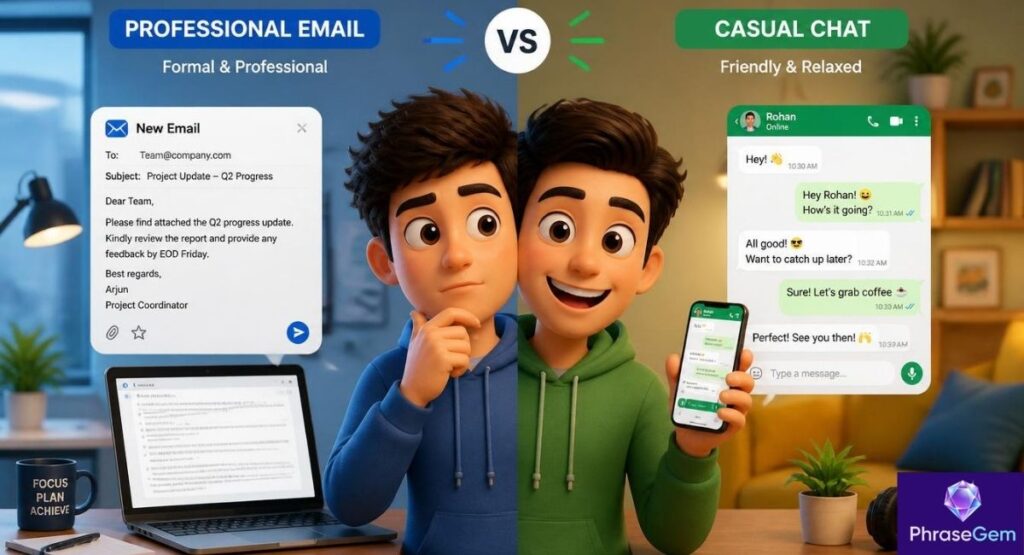
| Situation | Professional | Casual |
| Kindly allow us some time | We’ll get back to you soon | |
| Live Chat | Your request is being reviewed | Give us a sec |
| Phone | Please hold for a moment | Hang on just a minute |
| Support Ticket | We are currently reviewing this | We’re on it |
Mistakes to Avoid When Asking Someone to Wait
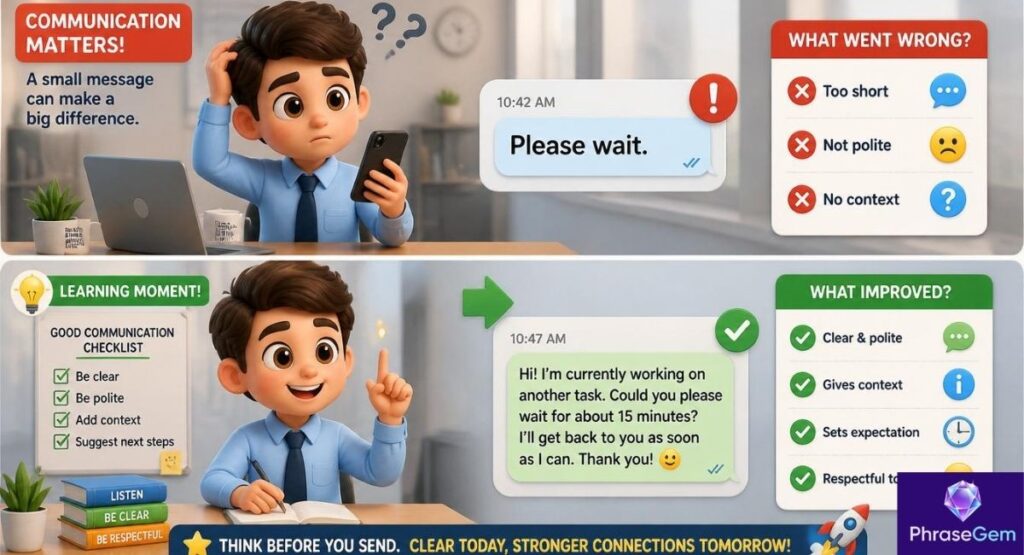
Most people don’t realize these small mistakes make customers more frustrated, not less.
- Saying “please be patient” with no reason given
- Promising a fast reply and then going quiet
- Using the same phrase over and over
- Saying “shortly” when it will actually take days
- Sounding robotic instead of human
Bonus Section: Short Polite Messages You Can Use
Copy and use these anytime you need a quick, polite response.
- “Thanks for reaching out. We’re on this and will update you shortly.”
- “We hear you. Give us a moment to sort this out.”
- “We appreciate your patience. An update is on its way.”
- “We’re almost done. Thank you for waiting.”
- “Your request is our priority right now.”
Final Writing Tips
Keep it short, keep it human, and always mean what you say.
- Always give a reason when asking someone to wait
- Use “you” and “we” to keep it personal
- Avoid copying the same line twice in one message
- If you promise an update, actually send one
- Warm words cost nothing but build a lot of trust
Frequently Asked Questions
What does “please be patient” mean?
It means you’re asking someone to stay calm and wait without getting frustrated while something is being sorted out.
When should I use “please be patient” in an email?
Use it when there’s a delay and you want to let the person know their request is being handled but needs more time.
Is “please be patient” rude to say?
Not really, but it can sound cold or dismissive if used without any explanation or reason behind it.
What is a more polite way to say “please be patient”?
Try saying “thank you for your patience” or “we appreciate you waiting.” These sound warmer and more genuine.
Can I say “please be patient” in a professional email?
You can, but phrases like “kindly allow us some time” or “we’ll get back to you shortly” sound more professional and polished.
How do you ask someone to wait without sounding rude?
Keep it short, give a reason, and show that you care. Say something like “we’re working on this and will update you soon.”
What are some friendly alternatives to “please be patient”?
You can say “thanks for bearing with us,” “we’re almost there,” or “we appreciate your understanding.” All of these feel more human.
Read Next : 27+ Other Ways to Say “Thank You for Your Quick Response”

Elliot Fairmont is a language enthusiast and content writer at PhraseGem.com with a passion for making English easier to understand. He specializes in English grammar, phrases, vocabulary, text slang meanings, and everyday communication. Through clear explanations and practical examples, Elliot Fairmont helps readers improve their language skills, expand their vocabulary, and communicate with greater confidence in both personal and professional settings.
When he’s not researching language trends and writing educational content, Elliot Fairmont enjoys reading, exploring modern communication styles, and discovering new ways to make learning English simple and engaging.