
Typing “thank you for the clarification” for the third time in the same email thread starts to feel hollow fast. Whether you are responding to a confused client, wrapping up a long back and forth with a colleague, or following up after a meeting that went sideways, the phrase does the job but leaves no real impression. Use it too often and you start sounding like an automated reply, not a person worth talking to.
This article gives you 28 hand picked alternatives sorted by tone, from formal professional settings to casual everyday conversations. Each one fits a different situation so you always know exactly which phrase to reach for. Read till the end and you will never fumble for the right words again.
Quick Meaning: Why We Say “Thank You for the Clarification”
We say this phrase to show we appreciate someone who cleared up confusion.
It tells the other person their explanation actually helped and wasn’t wasted. It also keeps the conversation polite and professional.
When Should You Use These Alternatives?
Use a different phrase when the same words start to feel robotic or repeated. The right choice depends on your tone and setting.
| Situation | Best Fit |
| Formal email or work chat | “I appreciate the clarification” |
| Casual conversation | “Thanks for clearing that up” |
| After a mistake was fixed | “Thanks for setting that straight” |
| Customer or client message | “Thank you for explaining that” |
27+ Other Ways to Say “Thank You for the Clarification”
1) “Thanks for clearing that up.”
Meaning: You felt confused and now you don’t. Simple as that.
Tone: Casual and friendly
Do: Use it when someone explains something in plain words
Don’t: Use it in a formal letter or serious professional email
Tip: Works best in quick chats, texts, or team messages.
Examples:
- Thanks for clearing that up. I was totally lost before.
- Oh, thanks for clearing that up. Now I get it.
- Thanks for clearing that up so fast.
- Thanks for clearing that up. I’ll update the file now.
- Thanks for clearing that up. Makes sense now.
2) “I appreciate the clarification.”
Meaning: You are thankful in a polite and professional way.
Tone: Formal and respectful
Do: Use in work emails, client messages, or official replies
Don’t: Use with close friends as it sounds stiff
Tip: Great for emails when you want to sound professional without being too cold.
Examples:
- I appreciate the clarification on the project deadline.
- I appreciate the clarification. I will proceed accordingly.
- Thank you. I appreciate the clarification on this matter.
- I appreciate the clarification from your team.
- I appreciate the clarification. This really helps.
3) “Thank you for explaining that.”
Meaning: Someone took time to explain and you are grateful they did.
Tone: Warm and polite
Do: Use when someone gave you a full explanation, not just a one word answer
Don’t: Use when someone only said yes or no
Tip: Pairs well with a follow up like “I’ll keep this in mind.”
Examples:
- Thank you for explaining that. It all makes sense now.
- Thank you for explaining that step by step.
- Thank you for explaining that policy clearly.
- Thank you for explaining that during the meeting.
- Thank you for explaining that to the whole team.
4) “That makes sense now, thank you.”
Meaning: You were confused but now you fully understand.
Tone: Natural and conversational
Do: Use after someone breaks down a complex topic for you
Don’t: Use if you still don’t understand as it may cause more confusion
Tip: Shows the other person their effort actually worked.
Examples:
- That makes sense now, thank you for walking me through it.
- Oh, that makes sense now. Thank you so much.
- That makes sense now. I had it wrong before.
- That makes sense now. Thank you for your patience.
- That makes sense now, thank you. I’ll get started.
5) “Thanks for the detailed explanation.”
Meaning: You are grateful they gave a thorough and complete answer.
Tone: Appreciative and professional
Do: Use when someone gives a long or well-thought-out explanation
Don’t: Use for a one-line reply, as it sounds sarcastic
Tip: Motivates people to keep giving good, detailed answers in the future.
Examples:
- Thanks for the detailed explanation of the new process.
- Thanks for the detailed explanation. Very helpful.
- Thanks for the detailed explanation in your email.
- Thanks for the detailed explanation during the call.
- Thanks for the detailed explanation. I’ll share it with the team.
6) “Thanks for confirming.”
Meaning: You needed a yes or a clear answer, and now you have it.
Tone: Short, direct, and professional
Do: Use when you just need a quick confirmation on something
Don’t: Use when someone gave a big, detailed explanation, as it feels dismissive
Tip: Perfect for quick reply emails or chat messages.
Examples:
- Thanks for confirming the meeting time.
- Thanks for confirming. I’ll block the date now.
- Thanks for confirming the order details.
- Thanks for confirming. We’re good to go.
- Thanks for confirming my understanding was correct.
7) “Thanks for helping me understand.”
Meaning: You struggled to get it, and this person made it click for you.
Tone: Humble and sincere
Do: Use when someone was patient and walked you through something
Don’t: Use in a sarcastic tone, as it can come across as rude
Tip: Shows real gratitude and makes the other person feel valued.
Examples:
- Thanks for helping me understand the new system.
- Thanks for helping me understand. I was really stuck.
- Thanks for helping me understand the contract terms.
- Thanks for helping me understand. I feel confident now.
- Thanks for helping me understand the whole situation.
8) “I’m glad you clarified that, thank you.”
Meaning: You are relieved they spoke up because it could have gone wrong.
Tone: Genuine and warm
Do: Use when a clarification saved you from a mistake
Don’t: Use if nothing was really at stake, as it sounds over dramatic
Tip: Works well when someone corrects a misunderstanding before it causes a problem.
Examples:
- I’m glad you clarified that before we sent the report.
- I’m glad you clarified that. I had it totally wrong.
- I’m glad you clarified that early in the project.
- I’m glad you clarified that. We avoided a big mistake.
- I’m glad you clarified that. Thank you for catching it.
9) “Thanks for the quick clarification.”
Meaning: You are grateful they responded fast and cleared things up quickly.
Tone: Light and appreciative
Do: Use when someone replies quickly and saves you time
Don’t: Use if their response took a long time, as it sounds passive-aggressive
Tip: A great way to acknowledge speed without making it a big deal.
Examples:
- Thanks for the quick clarification on the budget.
- Thanks for the quick clarification. Much appreciated.
- Thanks for the quick clarification. I’ll update the doc.
- Thanks for the quick clarification during the meeting.
- Thanks for the quick clarification on the deadline change.
10) “Thanks for walking me through it.”
Meaning: Someone explained things step by step, and you are thankful for that effort.
Tone: Friendly and warm
Do: Use when someone explains a process from start to finish
Don’t: Use for a single sentence answer
Tip: Great for training sessions, onboarding, or learning something new.
Examples:
- Thanks for walking me through the whole setup.
- Thanks for walking me through it. Now I can do it myself.
- Thanks for walking me through the process step by step.
- Thanks for walking me through it during the call.
- Thanks for walking me through the new software.
11) “Thank you for the added context.”
Meaning: The extra background information they gave helped you understand the full picture.
Tone: Professional and thoughtful
Do: Use when someone gives background details that help things make sense
Don’t: Use for basic simple answers
Tip: Shows you value depth and not just surface level answers.
Examples:
- Thank you for the added context on the client situation.
- Thank you for the added context. It changes how I see this.
- Thank you for the added context behind that decision.
- Thank you for the added context in your follow up email.
- Thank you for the added context. Very useful to know.
12) “Thanks for pointing that out.”
Meaning: Someone noticed something you missed, and you are glad they said something.
Tone: Humble and open
Do: Use when someone corrects or highlights something you overlooked
Don’t: Use sarcastically, as it sounds rude fast
Tip: Shows you welcome feedback and are not defensive about it.
Examples:
- Thanks for pointing that out. I’ll fix it right away.
- Thanks for pointing that out in the draft.
- Thanks for pointing that out. I missed that completely.
- Thanks for pointing that out during the review.
- Thanks for pointing that out before we launched.
13) “I appreciate you taking the time to clarify.”
Meaning: You know they were busy, and you value that they still took time to explain.
Tone: Polite and respectful
Do: Use when someone went out of their way to explain something
Don’t: Use for a quick one second reply, as it sounds over the top
Tip: A great phrase for managers, clients, or senior colleagues.
Examples:
- I appreciate you taking the time to clarify the new rules.
- I appreciate you taking the time to clarify this for the team.
- I appreciate you taking the time to clarify your earlier message.
- I appreciate you taking the time to clarify the process.
- I appreciate you taking the time to clarify. It really helped.
14) “Thanks for correcting me.”
Meaning: You said something wrong, and you are genuinely glad they fixed it.
Tone: Humble and honest
Do: Use when you made a clear mistake and someone politely corrected you
Don’t: Use if you disagree with the correction, as it sends mixed signals
Tip: Shows maturity and willingness to learn. People respect this.
Examples:
- Thanks for correcting me on the figures.
- Thanks for correcting me. I’ll update my notes.
- Thanks for correcting me in the meeting. Much needed.
- Thanks for correcting me before I sent that out.
- Thanks for correcting me. I had that totally backwards.
15) “Thanks for making that clearer.”
Meaning: Their second explanation was better than the first, and now you understand.
Tone: Relaxed and natural
Do: Use when someone rephrased or simplified something for you
Don’t: Use if the first explanation was already clear
Tip: Good when you have to ask twice and want to be gracious about it.
Examples:
- Thanks for making that clearer with the example.
- Thanks for making that clearer. Now I get it.
- Thanks for making that clearer in your second message.
- Thanks for making that clearer. The diagram helped.
- Thanks for making that clearer. I was overcomplicating it.
16) “Thanks, now I see what you mean.”
Meaning: It did not click before but now it does after their explanation.
Tone: Casual and honest
Do: Use in everyday conversations, team chats, or casual emails
Don’t: Use in a formal report or professional document
Tip: Very natural phrase that feels human and not robotic at all.
Examples:
- Thanks, now I see what you mean about the layout.
- Thanks, now I see what you mean. I’ll change my approach.
- Thanks, now I see what you mean. That’s a better way to do it.
- Thanks, now I see what you mean about the deadline.
- Thanks, now I see what you mean. I was overthinking it.
17) “That clears things up. Thank you.”
Meaning: There was confusion, and now it is completely gone.
Tone: Clean, direct, and polite
Do: Use when you want to wrap up a back and forth conversation
Don’t: Use at the very start of a conversation before anything has been explained
Tip: Works great as a closing line in an email thread.
Examples:
- That clears things up. Thank you so much.
- That clears things up. We’re all on the same page now.
- That clears things up. I’ll move forward with the plan.
- That clears things up. Thank you for the fast reply.
- That clears things up. I had been worried for nothing.
18) “Thanks for the clarification, really helpful.”
Meaning: The explanation was not just polite but actually useful to you.
Tone: Genuine and warm
Do: Use when the information directly helped you move forward
Don’t: Use when it did not actually help as it feels insincere
Tip: Adds a personal touch that makes your thank you feel more real.
Examples:
- Thanks for the clarification, really helpful for the report.
- Thanks for the clarification, really helpful. I’ll act on it now.
- Thanks for the clarification, really helpful context.
- Thanks for the clarification, really helpful before the meeting.
- Thanks for the clarification, really helpful. Appreciate it.
19) “I’m grateful for the clarification.”
Meaning: A deeper and more heartfelt thank you for someone who truly helped.
Tone: Sincere and slightly formal
Do: Use when someone went above and beyond to explain something
Don’t: Use in a super casual chat as it sounds heavy
Tip: Best for written communication like emails or formal messages.
Examples:
- I’m grateful for the clarification on this sensitive issue.
- I’m grateful for the clarification. It made a big difference.
- I’m grateful for the clarification before the presentation.
- I’m grateful for the clarification from your legal team.
- I’m grateful for the clarification. Thank you for your time.
20) “Thanks for clearing up the confusion.”
Meaning: There was real confusion happening and they fixed it.
Tone: Honest and direct
Do: Use when there was a genuine misunderstanding between people
Don’t: Use when things were never actually confusing
Tip: Good for team settings where mixed messages caused problems.
Examples:
- Thanks for clearing up the confusion about the launch date.
- Thanks for clearing up the confusion in the group chat.
- Thanks for clearing up the confusion between the two teams.
- Thanks for clearing up the confusion. We’re aligned now.
- Thanks for clearing up the confusion before things got worse.
21) “Thanks for specifying.”
Meaning: The details they added made a vague thing become clear.
Tone: Short and professional
Do: Use when someone gave you exact details you needed
Don’t: Use when someone gave a very general answer
Tip: A crisp phrase that works well in quick email replies.
Examples:
- Thanks for specifying which version we should use.
- Thanks for specifying the exact deadline.
- Thanks for specifying the correct contact person.
- Thanks for specifying. I’ll use those numbers.
- Thanks for specifying the right format for the file.
22) “Thanks for breaking it down.”
Meaning: Something felt complicated and they made it simple and easy to follow.
Tone: Relaxed and appreciative
Do: Use when someone explained something complex in simple steps
Don’t: Use for something that was already simple
Tip: Great for learning situations or when someone teaches you something new.
Examples:
- Thanks for breaking it down into simple steps.
- Thanks for breaking it down. I was so confused before.
- Thanks for breaking it down during the training.
- Thanks for breaking it down. I’ll share this with the team.
- Thanks for breaking it down so clearly. Really appreciated.
23) “Thanks for the clarification, much appreciated.”
Meaning: A complete and polished thank you that feels warm and professional.
Tone: Polite and professional
Do: Use to close an email or end a professional conversation
Don’t: Overuse it, as it starts to sound like a template
Tip: A safe all round phrase that works in almost any professional setting.
Examples:
- Thanks for the clarification, much appreciated as always.
- Thanks for the clarification on the contract. Much appreciated.
- Thanks for the clarification, much appreciated by the whole team.
- Thanks for the clarification on the pricing. Much appreciated.
- Thanks for the clarification, much appreciated. Have a great day.
24) “I appreciate you clearing up that misunderstanding.”
Meaning: Something was misread or taken the wrong way and they fixed it with calm.
Tone: Respectful and mature
Do: Use after a miscommunication or small conflict has been resolved
Don’t: Use when there was no actual misunderstanding
Tip: Helps close tense situations on a positive and respectful note.
Examples:
- I appreciate you clearing up that misunderstanding quickly.
- I appreciate you clearing up that misunderstanding over email.
- I appreciate you clearing up that misunderstanding in the meeting.
- I appreciate you clearing up that misunderstanding so patiently.
- I appreciate you clearing up that misunderstanding with the client.
25) “Thank you, that answers my question.”
Meaning: You had a question, and now it is fully answered. Done.
Tone: Clean, simple, and direct
Do: Use to signal that you got what you needed, and the conversation can end
Don’t: Use if you still have more questions as it confuses things
Tip: A great conversation closer that is polite without being over the top.
Examples:
- Thank you, that answers my question about the timeline.
- Thank you, that answers my question. I’ll take it from here.
- Thank you, that answers my question completely.
- Thank you, that answers my question about the refund policy.
- Thank you, that answers my question. Really appreciate it.
26) “Thanks for helping us stay aligned.”
Meaning: Their clarification kept the whole team on the same page.
Tone: Team focused and collaborative
Do: Use in group or team settings when alignment matters
Don’t: Use in a one on one personal chat as it sounds corporate
Tip: Great for project updates, team emails, or group threads.
Examples:
- Thanks for helping us stay aligned on the project goals.
- Thanks for helping us stay aligned ahead of the launch.
- Thanks for helping us stay aligned with the client’s expectations.
- Thanks for helping us stay aligned across both teams.
- Thanks for helping us stay aligned. Really needed that.
27) “Thanks for shedding light on that.”
Meaning: Something was dark and unclear, and they brought the light to it.
Tone: Thoughtful and slightly formal
Do: Use when someone revealed something that was previously hidden or unclear
Don’t: Use for super simple everyday answers
Tip: A smart sounding phrase that works well in professional writing.
Examples:
- Thanks for shedding light on that situation.
- Thanks for shedding light on that with the report.
- Thanks for shedding light on that decision from last year.
- Thanks for shedding light on that policy change.
- Thanks for shedding light on that. Very eye opening.
28) “I appreciate the clear explanation.”
Meaning: Their explanation was not just helpful but also easy to understand.
Tone: Warm and professional
Do: Use when someone explained something without making it complicated
Don’t: Use if the explanation was actually confusing
Tip: Compliments both the effort and the quality of the explanation.
Examples:
- I appreciate the clear explanation of the new terms.
- I appreciate the clear explanation you gave in the email.
- I appreciate the clear explanation during the onboarding.
- I appreciate the clear explanation. No more confusion now.
- I appreciate the clear explanation. Please pass my thanks to your team.
Email Examples Using These Phrases
Here are quick ready to use emails you can copy and adjust right now.
Formal Email:
Hi Sarah, thank you for the clarification on the project deadline. I appreciate you taking the time to explain. I will update the team accordingly.
Casual Work Email:
Hey Tom, thanks for clearing that up. Makes total sense now. I’ll get started on it today.
Client Email:
Dear Mr. Lee, I appreciate the clarification. That answers my question completely. Looking forward to moving ahead.
Cultural or Professional Etiquette Tips

How you say thank you depends a lot on where you are and who you are talking to.
| Setting | What Works Best |
| US or UK workplace | Casual but polite tone |
| Asian business culture | Formal and respectful language |
| European professional emails | Warm but structured |
| Internal team chat | Short and natural |
Always match your tone to the relationship. Saying “cheers for that” to a senior client in Japan would not land well.
Common Mistakes to Avoid
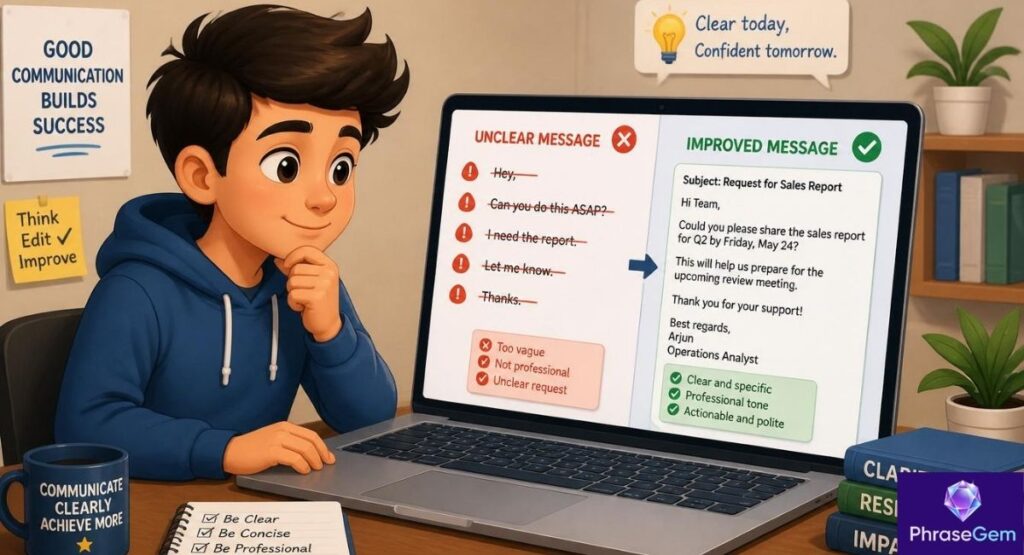
Most people get this wrong without even realising it.
- Overusing the same phrase in every email until it sounds robotic
- Using casual phrases in formal professional settings
- Thanking someone before they have actually explained anything
- Making it too long when a short reply is all that is needed
- Sounding sarcastic by using heavy formal language in a light situation
Keep it real, keep it human and match the energy of the conversation.
Bonus Section: Short Polite Texts You Can Send
Need something fast? These work perfectly for texts or chat messages.
- Got it, thanks for clearing that up.
- Makes sense now, appreciate it.
- Thanks, that answered everything.
- All clear now, cheers.
- Thanks for explaining, really helpful.
Short, warm and easy to send in under five seconds.
Final Writing Tips
Before you hit send, always ask yourself one thing: does this sound like a real person wrote it?
- Match your tone to the reader, not just the situation
- Shorter is almost always better in texts and chats
- In emails, add one line showing how their clarification helps you
- Never copy paste the same thank you every single time
- Read it out loud once if it sounds stiff rewrite it
The best thank you always feels personal, even if it is just one sentence.
Frequently Asked Questions
What does “thank you for the clarification” mean?
It means you are grateful someone cleared up something confusing or explained something you did not fully understand.
When should I say “thank you for the clarification”?
Say it after someone explains a confusing topic, corrects a misunderstanding, or gives you extra details that help things make sense.
Is “thank you for the clarification” formal or informal?
It leans formal. It works well in emails and professional settings, but can sound stiff in casual everyday conversations.
What is another way to say “thank you for the clarification”?
You can say “thanks for clearing that up,” “I appreciate the explanation,” or “thanks for breaking that down”, depending on your tone.
Can I use “thank you for the clarification” in an email?
Yes, it is one of the best phrases for professional emails, especially when wrapping up a confusing back-and-forth conversation.
Is it correct to say “thank you for the clarification”?
Yes, it is grammatically correct and widely accepted in both written and spoken professional English.
How do you respond when someone clarifies something?
Simply say “thank you for the clarification” or keep it short with “got it, thanks” or “that makes sense now, appreciate it.”
Read Next : Meaning of WYA: What It Really Means in Texts, Social Media, and Everyday Chats

Elliot Fairmont is a language enthusiast and content writer at PhraseGem.com with a passion for making English easier to understand. He specializes in English grammar, phrases, vocabulary, text slang meanings, and everyday communication. Through clear explanations and practical examples, Elliot Fairmont helps readers improve their language skills, expand their vocabulary, and communicate with greater confidence in both personal and professional settings.
When he’s not researching language trends and writing educational content, Elliot Fairmont enjoys reading, exploring modern communication styles, and discovering new ways to make learning English simple and engaging.