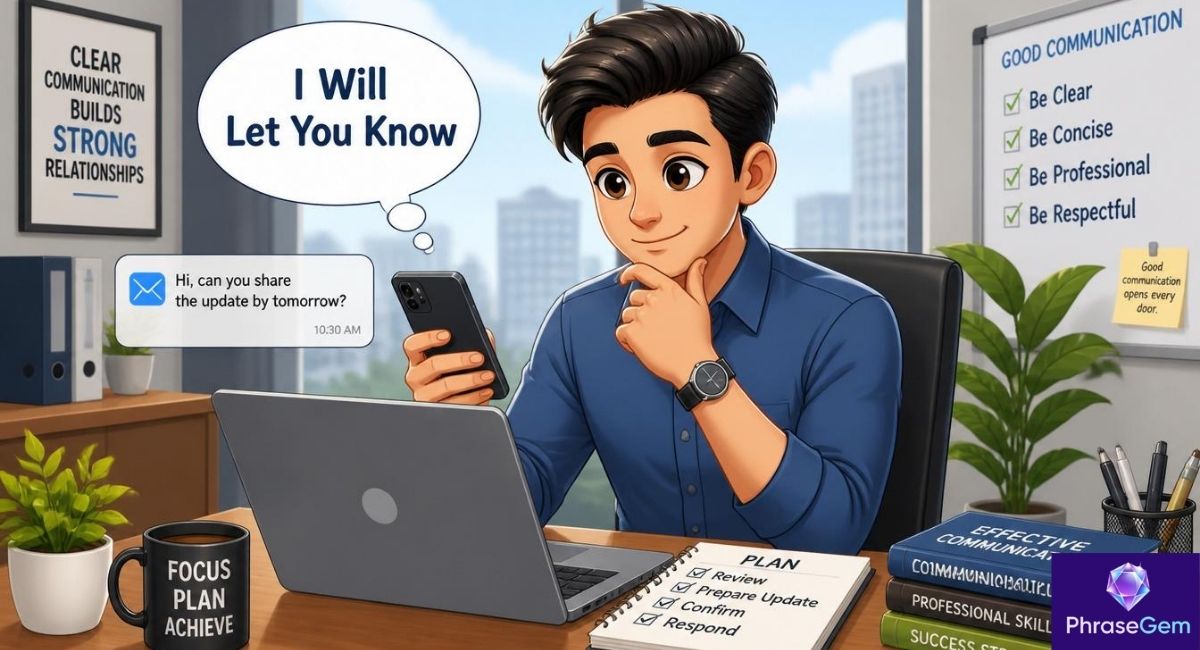
Saying “I will let you know” three times in one workday starts to feel lazy, even when you mean it sincerely. You use it in a job interview, drop it in a client email, and then say it again to a colleague waiting on your decision. After a while, the phrase loses its weight. It stops sounding professional and starts sounding like a polite way of saying nothing.
This article gives you 27+ fresh alternatives to “I will let you know” sorted by tone, situation, and level of formality. Whether you are writing a work email, replying to a friend, or handling a customer, you will find the right phrase for the right moment. Read on and never sound repetitive again.
Why “I Will Let You Know” Doesn’t Always Sound Right
It’s not wrong, but it can feel cold, vague, or even dismissive.
In professional emails or polite conversations, it sometimes sounds like you’re brushing someone off without a real commitment.
Quick reasons it falls flat:
- Too informal for formal business writing
- Sounds passive, like you’re avoiding a deadline
- Lacks warmth in sensitive or emotional conversations
When Should You Use These Alternatives?
Use a different phrase when the situation needs more clarity, warmth, or professionalism.
| Situation | Better Phrase |
| Professional email | “I will keep you updated” |
| Giving a deadline | “I will respond by Friday” |
| Emotional support | “I will make sure you hear from me” |
| Formal setting | “I will inform you shortly” |
A good rule: if “I will let you know” feels too casual or too vague for the moment, swap it for something more specific and human.
27+ Other Ways to Say “I Will Let You Know”
Here are the best alternatives with meaning, tone, examples, and quick tips to help you use each one correctly.
1. “I’ll get back to you.”
Meaning: You will contact someone again after you have an answer or update.
Tone: Casual and friendly
Do: Use it in everyday work conversations and quick replies.
Don’t: Use it without following through as it can break trust.
Tip: Add a timeframe like “I’ll get back to you by tomorrow” to sound more reliable.
Examples:
- I’ll get back to you once I check with the team.
- Let me look into this. I’ll get back to you soon.
- I’ll get back to you after the meeting.
- Thanks for reaching out. I’ll get back to you shortly.
- I’ll get back to you once I have a clear answer.
2. “I’ll keep you posted.”
Meaning: You will continue sharing updates as things develop.
Tone: Friendly and conversational
Do: Use it when a situation is ongoing and updates are expected.
Don’t: Say it and then go silent for days.
Tip: Great for project updates or when decisions are still being made.
Examples:
- I’ll keep you posted on the delivery status.
- Things are still being finalized. I’ll keep you posted.
- I’ll keep you posted as soon as we hear back.
- Not confirmed yet but I’ll keep you posted.
- I’ll keep you posted on any changes to the plan.
3. “I’ll follow up with you.”
Meaning: You will come back to the person with more information or next steps.
Tone: Professional and reliable
Do: Use in formal emails and business conversations.
Don’t: Use it casually when a simpler phrase would feel more natural.
Tip: Works perfectly in client emails and workplace communication.
Examples:
- I’ll follow up with you after the review is complete.
- I’ll follow up with you by end of week.
- Let me gather the details and I’ll follow up with you.
- I’ll follow up with you once the report is ready.
- I’ll follow up with you after speaking with the manager.
4. “I’ll update you soon.”
Meaning: You will share new information in a short period of time.
Tone: Warm and reassuring
Do: Use when you expect to have news relatively quickly.
Don’t: Say “soon” if you actually mean days or weeks.
Tip: Be specific when possible like “I’ll update you by Thursday.”
Examples:
- Still working on it. I’ll update you soon.
- I’ll update you soon once things are sorted.
- Just waiting for approval. I’ll update you soon.
- I’ll update you soon with the final numbers.
- Give me a couple of hours and I’ll update you soon.
5. “I’ll let you know once I have more details.”
Meaning: You are waiting for more information before you can respond fully.
Tone: Honest and transparent
Do: Use when you genuinely need more time to gather facts.
Don’t: Use it to avoid giving an answer you already have.
Tip: This phrase builds trust because it shows you are being thorough.
Examples:
- The plan isn’t final yet. I’ll let you know once I have more details.
- I’ll let you know once I have more details from the supplier.
- Still checking. I’ll let you know once I have more details.
- I’ll let you know once I have more details about the schedule.
- I’ll let you know once I have more details on pricing.
6. “I’ll confirm and get back to you.”
Meaning: You need to verify something first before giving a final answer.
Tone: Professional and careful
Do: Use when accuracy matters and you want to double check before replying.
Don’t: Use if you already have the answer and are just delaying.
Tip: Perfect for situations involving bookings, approvals, or technical facts.
Examples:
- I’ll confirm and get back to you about the meeting room.
- Let me check availability. I’ll confirm and get back to you.
- I’ll confirm and get back to you after speaking with HR.
- Not 100% sure yet. I’ll confirm and get back to you.
- I’ll confirm and get back to you with the exact date.
7. “I’ll share an update soon.”
Meaning: You will send new information or progress notes in a little while.
Tone: Friendly and proactive
Do: Use during ongoing tasks or projects where someone is waiting.
Don’t: Use it repeatedly without actually sharing anything new.
Tip: Combine it with what you are updating about for more clarity.
Examples:
- We are reviewing the proposal. I’ll share an update soon.
- I’ll share an update soon on the shipping status.
- Just finishing the last checks. I’ll share an update soon.
- I’ll share an update soon once the team meets.
- I’ll share an update soon regarding your application.
8. “I’ll keep you informed.”
Meaning: You will make sure the person always knows what is happening.
Tone: Formal and professional
Do: Use in business or official settings where someone needs regular updates.
Don’t: Use in casual texts as it can feel stiff.
Tip: Great for client relationships and managing expectations.
Examples:
- As the project moves forward I’ll keep you informed.
- I’ll keep you informed of any changes to the timeline.
- I’ll keep you informed throughout the process.
- Any new developments and I’ll keep you informed right away.
- I’ll keep you informed so there are no surprises.
9. “I’ll reach out once I know more.”
Meaning: You will contact the person after getting the information you need.
Tone: Casual yet responsible
Do: Use when you are the one initiating the next contact.
Don’t: Use if the other person is expected to follow up first.
Tip: Shows initiative and reassures the other person they don’t need to chase you.
Examples:
- Still gathering info. I’ll reach out once I know more.
- I’ll reach out once I know more about the outcome.
- I’ll reach out once I know more from the legal team.
- No news yet but I’ll reach out once I know more.
- I’ll reach out once I know more about the delivery window.
10. “I’ll get back to you shortly.”
Meaning: You will reply or respond in a very short amount of time.
Tone: Polite and slightly formal
Do: Use when you genuinely expect to respond within minutes or hours.
Don’t: Say “shortly” and then take two days.
Tip: Use this in customer service or quick workplace replies.
Examples:
- I’ll get back to you shortly with the information.
- Just checking my records. I’ll get back to you shortly.
- I’ll get back to you shortly after the call ends.
- Thank you for your patience. I’ll get back to you shortly.
- I’ll get back to you shortly once I confirm the details.
11. “I’ll let you know as soon as possible.”
Meaning: You will inform the person at the earliest opportunity.
Tone: Sincere and committed
Do: Use when there is urgency and you want to show you take it seriously.
Don’t: Overuse it as it can start to feel like a filler phrase.
Tip: Adding context like “I’ll let you know as soon as the results are in” makes it stronger.
Examples:
- I understand this is urgent. I’ll let you know as soon as possible.
- I’ll let you know as soon as possible once I hear back.
- I’ll let you know as soon as possible about the approval.
- I’ll let you know as soon as possible after the review.
- I’ll let you know as soon as possible if anything changes.
12. “I’ll update you once it’s confirmed.”
Meaning: You are waiting for official confirmation before sharing news.
Tone: Reliable and straightforward
Do: Use when something is pending approval, signature, or a final decision.
Don’t: Use it when the confirmation is completely open ended.
Tip: It sets a clear expectation so the person knows exactly when to expect news.
Examples:
- The date is almost set. I’ll update you once it’s confirmed.
- I’ll update you once it’s confirmed by management.
- Waiting on the vendor. I’ll update you once it’s confirmed.
- I’ll update you once it’s confirmed from the head office.
- I’ll update you once it’s confirmed and everything is official.
13. “I’ll check and let you know.”
Meaning: You need to look into something first before answering.
Tone: Honest and action oriented
Do: Use when you don’t have the answer on hand but will find it.
Don’t: Use it as a way to avoid answering something you already know.
Tip: It shows you are responsible and not guessing.
Examples:
- I’m not sure off the top of my head. I’ll check and let you know.
- I’ll check and let you know about the stock availability.
- I’ll check and let you know what time works best.
- I’ll check and let you know if the room is booked.
- I’ll check and let you know before end of day.
14. “I’ll keep you updated.”
Meaning: You will continue to share new information as it becomes available.
Tone: Warm and ongoing
Do: Use for situations that involve multiple stages or waiting periods.
Don’t: Promise updates and then disappear.
Tip: Pair it with a channel like “I’ll keep you updated via email” to set clear expectations.
Examples:
- Things are still moving. I’ll keep you updated.
- I’ll keep you updated on how the interview goes.
- I’ll keep you updated as soon as we have news.
- I’ll keep you updated throughout the whole process.
- I’ll keep you updated on any delays or changes.
15. “I’ll respond once I have an answer.”
Meaning: You will reply only when you have a proper and complete answer.
Tone: Direct and honest
Do: Use when you want to avoid giving a half answer or guessing.
Don’t: Use it to delay unnecessarily when a quick reply would help.
Tip: It signals that your response will be worth waiting for.
Examples:
- I’ll respond once I have an answer from the department.
- I’ll respond once I have an answer on the budget.
- Give me some time. I’ll respond once I have an answer.
- I’ll respond once I have an answer from the doctor.
- I’ll respond once I have an answer confirmed in writing.
16. “I’ll get clarification and follow up.”
Meaning: You need to clear up some confusion or details before you can respond.
Tone: Professional and thorough
Do: Use when the request is unclear or involves multiple parties.
Don’t: Use it just to avoid making a decision.
Tip: Great phrase to use in team settings or client facing roles.
Examples:
- I’ll get clarification and follow up before the deadline.
- I’ll get clarification and follow up with you by tomorrow.
- The instructions are a bit unclear. I’ll get clarification and follow up.
- I’ll get clarification and follow up once I speak to the team.
- I’ll get clarification and follow up so we’re on the same page.
17. “I’ll circle back with you.”
Meaning: You will return to the conversation at a later point with more information.
Tone: Casual and modern office style
Do: Use in workplace conversations and team meetings.
Don’t: Overuse it as it can sound like corporate jargon.
Tip: Best used in team environments where everyone understands workplace lingo.
Examples:
- Let me dig into this. I’ll circle back with you this afternoon.
- I’ll circle back with you after the standup.
- I’ll circle back with you once I’ve reviewed the file.
- I’ll circle back with you later today with a full update.
- I’ll circle back with you once the decision is made.
18. “I’ll notify you.”
Meaning: You will send a formal alert or message when there is news.
Tone: Formal and official
Do: Use in formal emails, customer service, or automated type communication.
Don’t: Use it in casual friendly conversations as it sounds robotic.
Tip: Works well in written policies, terms, or official business language.
Examples:
- I’ll notify you as soon as your order ships.
- I’ll notify you when your application has been reviewed.
- I’ll notify you of any changes to your account.
- I’ll notify you once a decision has been reached.
- I’ll notify you by email when the results are ready.
19. “I’ll keep this in mind and update you.”
Meaning: You are acknowledging the request and will come back with relevant news.
Tone: Thoughtful and considerate
Do: Use when someone has shared a concern or preference they want noted.
Don’t: Use it if you have no real intention of following up.
Tip: Shows the other person that you listened and will act on it.
Examples:
- I’ll keep this in mind and update you if anything changes.
- I’ll keep this in mind and update you as we finalize the plan.
- Your preference is noted. I’ll keep this in mind and update you.
- I’ll keep this in mind and update you after the review.
- I’ll keep this in mind and update you before the deadline.
20. “I’ll get back once I’ve checked.”
Meaning: You will look into the matter and then reply.
Tone: Practical and grounded
Do: Use for quick fact checking or verification tasks.
Don’t: Use when the checking process will take a very long time without saying so.
Tip: It is honest and shows you are not just guessing.
Examples:
- I’ll get back once I’ve checked my calendar.
- I’ll get back once I’ve checked the inventory.
- Not sure right now. I’ll get back once I’ve checked.
- I’ll get back once I’ve checked with the finance team.
- I’ll get back once I’ve checked the updated schedule.
21. “I’ll share more information shortly.”
Meaning: Additional details are coming soon and you will send them in a little while.
Tone: Helpful and forward looking
Do: Use when you know more is coming but can’t share everything right now.
Don’t: Use “shortly” if the timeline is actually unclear.
Tip: Good for situations where you are waiting on a document or report.
Examples:
- The full report isn’t ready yet. I’ll share more information shortly.
- I’ll share more information shortly once I get off the call.
- I’ll share more information shortly about the event details.
- I’ll share more information shortly once it’s approved.
- I’ll share more information shortly so you can plan ahead.
22. “I’ll update you when there’s progress.”
Meaning: You will only reach out when something meaningful has moved forward.
Tone: Calm and measured
Do: Use for long running tasks where constant updates aren’t needed.
Don’t: Use it as a way to avoid communication altogether.
Tip: Reduces unnecessary back and forth while still showing you are on top of it.
Examples:
- The process is slow right now. I’ll update you when there’s progress.
- I’ll update you when there’s progress on the case.
- Nothing new yet but I’ll update you when there’s progress.
- I’ll update you when there’s progress worth sharing.
- I’ll update you when there’s progress from the supplier.
23. “I’ll get back to you with an update.”
Meaning: You will return to the conversation specifically with new information.
Tone: Clear and professional
Do: Use when someone is actively waiting for news or next steps.
Don’t: Use it repeatedly without ever delivering the actual update.
Tip: Adding a time like “I’ll get back to you with an update by Friday” builds more trust.
Examples:
- I’ll get back to you with an update after the review.
- I’ll get back to you with an update on the shipment.
- I’ll get back to you with an update by end of day.
- I’ll get back to you with an update once we’ve decided.
- I’ll get back to you with an update as soon as I hear back.
24. “I’ll let you know once it’s finalized.”
Meaning: You will inform the person when everything is officially decided and done.
Tone: Confident and clear
Do: Use when a decision is close but not yet official.
Don’t: Use it if finalization is months away without giving a rough timeline.
Tip: It reassures the other person that a clear answer is coming.
Examples:
- The contract is almost ready. I’ll let you know once it’s finalized.
- I’ll let you know once it’s finalized and signed off.
- I’ll let you know once it’s finalized by the committee.
- Still in review. I’ll let you know once it’s finalized.
- I’ll let you know once it’s finalized so you can move forward.
25. “I’ll be in touch.”
Meaning: You will contact the person again at some point in the future.
Tone: Warm and friendly
Do: Use at the end of conversations to close on a positive note.
Don’t: Use it if you have no actual plan to follow up.
Tip: It is a great closing line for emails, calls, and in person meetings.
Examples:
- Great speaking with you today. I’ll be in touch.
- I’ll be in touch once I have the next steps ready.
- I’ll be in touch after I speak with the team.
- Thank you for your time. I’ll be in touch soon.
- I’ll be in touch as things develop.
26. “I’ll provide an update when available.”
Meaning: You will share information as soon as it becomes ready or accessible.
Tone: Formal and neutral
Do: Use in professional reports, status emails, or official communication.
Don’t: Use in casual conversations as it sounds too stiff.
Tip: Common in project management and corporate communication where timelines are uncertain.
Examples:
- The data is still being compiled. I’ll provide an update when available.
- I’ll provide an update when available after the audit.
- I’ll provide an update when available from the research team.
- I’ll provide an update when available via the project portal.
- I’ll provide an update when available before the next meeting.
27. “I’ll keep you in the loop.”
Meaning: You will make sure the person stays informed and included in what is happening.
Tone: Friendly and team oriented
Do: Use when someone wants to stay aware of ongoing developments.
Don’t: Use it and then exclude the person from key conversations.
Tip: Perfect for team projects where multiple people need to stay informed.
Examples:
- I’ll keep you in the loop as things move forward.
- Don’t worry. I’ll keep you in the loop throughout the project.
- I’ll keep you in the loop on any decisions that affect you.
- I’ll keep you in the loop so nothing comes as a surprise.
- I’ll keep you in the loop once we hear from the client.
28. “I’ll share the details once I have them.”
Meaning: You will pass along the full information as soon as you receive or confirm it.
Tone: Honest and straightforward
Do: Use when you are waiting on information from someone else before you can respond.
Don’t: Use it as an excuse to delay when you already have the details.
Tip: It manages expectations well and shows you are not holding anything back.
Examples:
- The agenda isn’t set yet. I’ll share the details once I have them.
- I’ll share the details once I have them from the organizer.
- I’ll share the details once I have them confirmed in writing.
- Still waiting on the brief. I’ll share the details once I have them.
- I’ll share the details once I have them so you can prepare.
Different Situations Where You Can Say “I Will Let You Know”
You can use this phrase in many everyday situations. Here are the most common ones:
| Situation | Example |
| Work email | “I’ll let you know once the report is ready.” |
| Job interview | “I’ll let you know about our decision by Friday.” |
| Friend plans | “I’ll let you know if I can make it tonight.” |
| Customer service | “I’ll let you know once your order is dispatched.” |
| Medical update | “I’ll let you know when the results are in.” |
It works in both formal and informal settings. Just make sure you actually follow through.
“I Will Let You Know” vs “I’ll Get Back to You”: What’s the Difference?
They are very similar but not exactly the same.
“I will let you know” focuses on sharing new information when it becomes available.
“I’ll get back to you” focuses on responding to a question or request someone already asked.
| Phrase | Best Used When |
| I will let you know | You will share news when it arrives |
| I’ll get back to you | You need time to find an answer |
Simple rule: if someone asked you something, say “I’ll get back to you.” If you are volunteering future information, say “I will let you know.”
Common Mistakes to Avoid When Saying “I Will Let You Know”
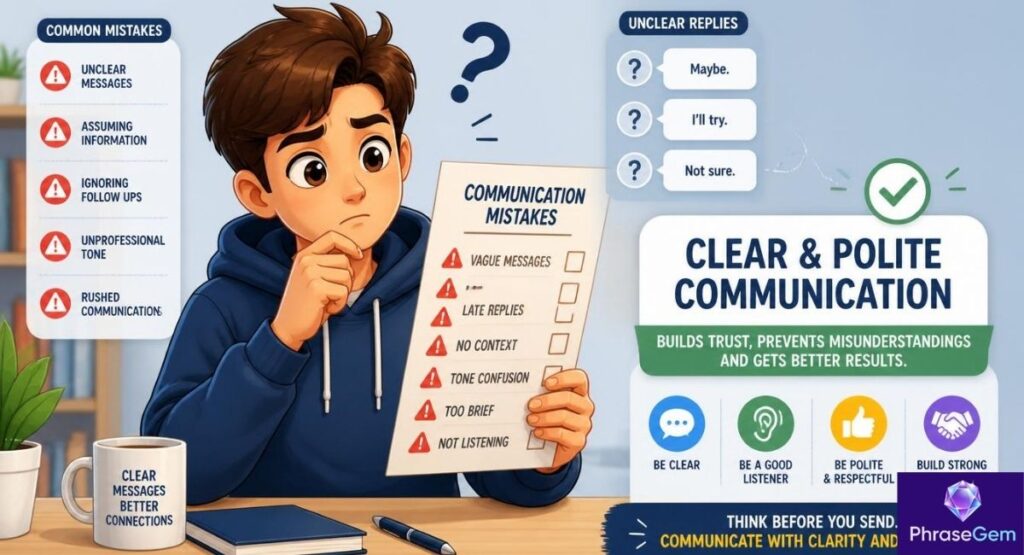
Most people say it right but use it wrong. Here is what to watch out for:
- Saying it without following up. This breaks trust fast.
- Using it to avoid giving an answer you already have.
- Saying it with no timeframe so the person is left guessing.
- Overusing it so it starts to sound like an empty promise.
- Using it in urgent situations where the person needs a real answer now.
Quick tip: Always pair it with a time or next step like “I’ll let you know by Thursday” to sound reliable.
Bonus Section: Short and Polite Alternatives
Sometimes you just need something quick and natural. These work great:
- “I’ll update you soon.”
- “Stay tuned.”
- “More details coming.”
- “I’ll confirm shortly.”
- “Watch this space.”
- “I’ll be in touch.”
- “I’ll send you an update.”
Use these when you want to keep things short but still sound polite and professional.
Final Writing Tips
Keep it simple, clear, and human. Here is what works:
- Always give a timeframe when you can. “Soon” is vague. “By Friday” is clear.
- Match your tone to the situation. Be warm with friends, professional with clients.
- Do not say it and disappear. Follow through every time.
- Use alternatives when the phrase starts to feel repetitive.
- Read your message out loud before sending. If it sounds robotic, rewrite it.
The best communication is honest, specific, and on time. That matters more than the exact words you choose.
Frequently Asked Questions
What does “I will let you know” mean?
It means you will share information with someone once you have it. It is a polite way of saying the answer or update is coming soon.
Is “I will let you know” formal or informal?
It works in both situations. It is polite enough for professional emails and natural enough for casual conversations with friends.
What is a more professional way to say “I will let you know”?
You can say “I will keep you informed” or “I will follow up with you shortly.” These sound more formal and work well in business settings.
Can I use “I will let you know” in an email?
Yes, it is perfectly fine in emails. Just add a timeframe like “I will let you know by Friday” to sound more reliable and professional.
What is the difference between “I will let you know” and “I will keep you posted”?
“I will let you know” is a one time update. “I will keep you posted” means you will share multiple updates over time as things develop.
Is it rude to say “I will let you know”?
Not at all. It only sounds rude if you never actually follow up. Always keep your word after saying it.
How do you politely say “I will let you know” to a boss or manager?
Say “I will update you as soon as I have more information” or “I will follow up with you shortly.” These sound more respectful in a workplace setting.
What can I say instead of “I will let you know” in a text message?
You can say “I’ll update you soon,” “I’ll ping you,” or simply “I’ll get back to you.” Short and casual works perfectly in texts.
Why do people say “I will let you know” so often?
It is easy, polite, and fits almost any situation. People use it when they need more time but still want to sound helpful and responsive.
Can “I will let you know” be used in customer service?
Yes, it is very common in customer service. Saying “I will let you know once your issue is resolved” reassures the customer that help is on the way.
Read Next : 27+ Better Ways to Say “Please Be Patient” (With Examples)

Elliot Fairmont is a language enthusiast and content writer at PhraseGem.com with a passion for making English easier to understand. He specializes in English grammar, phrases, vocabulary, text slang meanings, and everyday communication. Through clear explanations and practical examples, Elliot Fairmont helps readers improve their language skills, expand their vocabulary, and communicate with greater confidence in both personal and professional settings.
When he’s not researching language trends and writing educational content, Elliot Fairmont enjoys reading, exploring modern communication styles, and discovering new ways to make learning English simple and engaging.