You have typed “I hope this email finds you well” so many times this month that your fingers do it automatically. It shows up in cold emails, follow-ups, client check-ins, and every Monday morning message without fail.
People notice when an opener is copy-pasted from habit, and it makes the whole email feel lazy before they even read the second line. Overusing “Hope this email finds you well” quietly signals that you did not put much thought into writing to them specifically.
This article gives you 28+ fresh alternatives that actually fit the moment. Each one is matched to a specific tone and situation so you are not just swapping one generic line for another. By the end, you will know exactly which opener to use, when to use it, and how to sound like a person worth writing back to.
Stop Using the Same Old Email Opening Every Time
“I hope this email finds you well” is dead. Everyone uses it. Nobody reads it. It makes you sound like a robot copying from a template.
Your opening line sets the tone. A fresh, real opener gets attention. A boring one gets ignored or deleted.
People notice when you actually sound human.
When Should You Use These Alternatives?
Use a different opener based on what the email is actually about:
| Situation | Better Opening Style |
| First contact | Mention something specific about them |
| Follow-up | Reference your last conversation |
| Cold outreach | Lead with value, not pleasantries |
| Urgent message | Get straight to the point |
| Friendly check-in | Keep it casual and warm |
The rule is simple: if the opener could work in any email to anyone, rewrite it.
28+ Other Ways to Say “Hope This Email Finds You Well”
1. “I hope you’re doing well.”
Meaning: A simple, clean check-in that sounds natural.
Tone: Friendly and neutral
Do: Use it for everyday professional emails.
Don’t: Use it in urgent or very formal emails.
Tip: It works best when you genuinely don’t know how the person is doing.
Examples:
- I hope you’re doing well. I wanted to share the updated report.
- I hope you’re doing well. Just following up on our last chat.
- I hope you’re doing well. Here’s the proposal you asked for.
- I hope you’re doing well. I had a quick question for you.
- I hope you’re doing well. Excited to connect with you today.
2. “I hope you’re having a great day.”
Meaning: Warm and cheerful opener that feels human.
Tone: Upbeat and casual
Do: Use with clients or colleagues you’re friendly with.
Don’t: Use in serious or sensitive emails.
Tip: Best for morning emails when the energy is fresh.
Examples:
- I hope you’re having a great day. Wanted to touch base quickly.
- I hope you’re having a great day. Here’s what we discussed.
- I hope you’re having a great day. I’d love your thoughts on this.
- I hope you’re having a great day. The files are ready for review.
- I hope you’re having a great day. Let me know if you need anything.
3. “I hope everything is going well.”
Meaning: A broader version that goes beyond just the person to their situation.
Tone: Warm and considerate
Do: Use when you haven’t spoken in a while.
Don’t: Use if you know things are not going well for them.
Tip: Pair it with a personal touch to make it feel real.
Examples:
- I hope everything is going well. I wanted to reconnect with you.
- I hope everything is going well on your end. Here’s the update.
- I hope everything is going well. I’m reaching out about the project.
- I hope everything is going well. Let’s schedule a quick call.
- I hope everything is going well. I have some exciting news to share.
4. “I trust you’re doing well.”
Meaning: Slightly more formal way to wish someone well without asking directly.
Tone: Professional and confident
Do: Use in formal business or corporate emails.
Don’t: Use with close friends or casual teammates.
Tip: “I trust” adds a layer of confidence and respect.
Examples:
- I trust you’re doing well. Please find the contract attached.
- I trust you’re doing well. I wanted to follow up on our meeting.
- I trust you’re doing well. Here is the information you requested.
- I trust you’re doing well. I’d like to schedule a brief call.
- I trust you’re doing well. Kindly review the document when possible.
5. “I hope this message reaches you at a good time.”
Meaning: Shows you respect the other person’s time and schedule.
Tone: Polite and considerate
Do: Use when contacting someone for the first time or outside work hours.
Don’t: Overuse it or it starts to feel passive.
Tip: Great for cross-timezone emails where timing is uncertain.
Examples:
- I hope this message reaches you at a good time. I had a quick question.
- I hope this message reaches you at a good time. I wanted to share an update.
- I hope this message reaches you at a good time. No rush on the reply.
- I hope this message reaches you at a good time. Here’s the brief summary.
- I hope this message reaches you at a good time. Looking forward to connecting.
6. “I hope you’re having a productive week.”
Meaning: Acknowledges the work context and shows you care about their progress.
Tone: Professional and motivating
Do: Use mid-week, especially Tuesday through Thursday.
Don’t: Use on a Friday or Monday when it doesn’t fit the flow.
Tip: It subtly signals that you value productivity, great for work-focused contacts.
Examples:
- I hope you’re having a productive week. Sharing the weekly report now.
- I hope you’re having a productive week. Wanted to sync on the deadline.
- I hope you’re having a productive week. Here’s the final version.
- I hope you’re having a productive week. Let me know if you need support.
- I hope you’re having a productive week. I’d love your feedback on this.
7. “I hope all is well with you.”
Meaning: A short, classic way to express care without overthinking it.
Tone: Warm and simple
Do: Use in quick, short emails where you want a human opener.
Don’t: Use it repeatedly with the same person.
Tip: Works great when you’re reconnecting after a gap.
Examples:
- I hope all is well with you. Just wanted to check in.
- I hope all is well with you. Here’s the link you asked for.
- I hope all is well with you. I have a small favor to ask.
- I hope all is well with you. The team is ready to move forward.
- I hope all is well with you. Let’s catch up soon.
8. “I hope you’re doing well today.”
Meaning: A time-specific opener that feels personal and present.
Tone: Friendly and light
Do: Use for same-day emails or quick touchpoints.
Don’t: Use for long formal emails where tone needs to stay serious.
Tip: Adding “today” makes it feel more genuine and less copy-pasted.
Examples:
- I hope you’re doing well today. Just a quick update from my end.
- I hope you’re doing well today. Wanted to share some good news.
- I hope you’re doing well today. Here’s the revised version.
- I hope you’re doing well today. Let me know if you’re free to chat.
- I hope you’re doing well today. I really appreciate your help.
9. “I hope you’re having a smooth week.”
Meaning: Wishes ease and flow in their week, not just productivity.
Tone: Relaxed and empathetic
Do: Use when someone has been dealing with a busy or tough schedule.
Don’t: Use in stiff corporate environments where it may feel too casual.
Tip: “Smooth” is a great word choice as it implies less stress.
Examples:
- I hope you’re having a smooth week. Just checking in on the project.
- I hope you’re having a smooth week. Here’s the summary we discussed.
- I hope you’re having a smooth week. Wanted to make things easier for you.
- I hope you’re having a smooth week. Let me know if anything comes up.
- I hope you’re having a smooth week. Happy to help wherever needed.
10. “I hope you’re keeping well.”
Meaning: A slightly British and warm way to wish someone good health.
Tone: Caring and polite
Do: Use with international contacts or in more formal English settings.
Don’t: Use in fast-paced casual office cultures where it may sound stiff.
Tip: It feels thoughtful and a bit personal without being too emotional.
Examples:
- I hope you’re keeping well. I wanted to touch base with you.
- I hope you’re keeping well. The team sends their regards.
- I hope you’re keeping well. Please review the attached document.
- I hope you’re keeping well. I’d love to catch up soon.
- I hope you’re keeping well. Let me know your thoughts on this.
11. “I hope your day is going well.”
Meaning: Present-tense check-in that feels fresh and in the moment.
Tone: Casual and warm
Do: Use for quick mid-day emails to colleagues or clients.
Don’t: Use late in the evening when it sounds odd timing-wise.
Tip: Short and real, it works well in informal professional spaces.
Examples:
- I hope your day is going well. Just a heads-up on the schedule.
- I hope your day is going well. Sharing the latest update here.
- I hope your day is going well. Do you have five minutes to connect?
- I hope your day is going well. Here’s the file you requested.
- I hope your day is going well. Looking forward to your reply.
12. “I hope this email finds you in good spirits.”
Meaning: A warmer, more expressive version of the classic opener.
Tone: Warm and slightly poetic
Do: Use when building a relationship or writing a thoughtful message.
Don’t: Use in short, transactional emails where it feels too heavy.
Tip: It signals emotional awareness which builds trust with the reader.
Examples:
- I hope this email finds you in good spirits. I have great news to share.
- I hope this email finds you in good spirits. Wanted to reach out personally.
- I hope this email finds you in good spirits. Here’s an exciting update.
- I hope this email finds you in good spirits. I’d love your thoughts.
- I hope this email finds you in good spirits. Let’s make something great together.
13. “I hope you’re doing well these days.
Meaning: A more relaxed and current version, implying you’ve been thinking of them.
Tone: Friendly and genuine
Do: Use when reconnecting after some time has passed.
Don’t: Use in daily emails where it sounds repetitive.
Tip: “These days” adds a personal feel, great for warming up old connections.
Examples:
- I hope you’re doing well these days. It’s been a while since we spoke.
- I hope you’re doing well these days. I wanted to reconnect with you.
- I hope you’re doing well these days. I came across something you’d like.
- I hope you’re doing well these days. Would love to catch up soon.
- I hope you’re doing well these days. Here’s a quick update from my side.
14. “I hope everything’s going smoothly.”
Meaning: A casual way to wish things are easy and stress-free for them.
Tone: Easygoing and warm
Do: Use with people you already have a working relationship with.
Don’t: Use in very formal or first-contact emails.
Tip: The contraction “everything’s” makes it feel more conversational and natural.
Examples:
- I hope everything’s going smoothly. Just wanted to check in.
- I hope everything’s going smoothly on your end. Here’s the update.
- I hope everything’s going smoothly with the project.
- I hope everything’s going smoothly. I have a quick question for you.
- I hope everything’s going smoothly. Let me know if you need anything.
15. “I hope this message finds you well.”
Meaning: A slightly softer version of the classic “email finds you well.”
Tone: Neutral and polished
Do: Use in formal or semi-formal emails when you want to stay professional.
Don’t: Rely on it too heavily as it’s still close to the overused original.
Tip: Swapping “email” for “message” gives it a fresh feel without changing the meaning.
Examples:
- I hope this message finds you well. I wanted to follow up on our discussion.
- I hope this message finds you well. Please see the attached report.
- I hope this message finds you well. I’d love to schedule a meeting.
- I hope this message finds you well. Here’s the update you were waiting for.
- I hope this message finds you well. Looking forward to hearing from you.
16. “I hope you’re doing well this week.”
Meaning: Ties the greeting to the current week, making it feel timely.
Tone: Professional and friendly
Do: Use at the start of the work week or mid-week emails.
Don’t: Use on a Friday since it sounds off timing-wise.
Tip: Week-specific openers feel more real than generic ones.
Examples:
- I hope you’re doing well this week. Sending over the updated plan.
- I hope you’re doing well this week. Ready to move forward on this.
- I hope you’re doing well this week. Just a quick check-in from me.
- I hope you’re doing well this week. Let’s finalize the schedule.
- I hope you’re doing well this week. Here’s what I have so far.
17. “I hope you’re having a positive week.”
Meaning: Sends good energy and a forward-looking vibe.
Tone: Optimistic and encouraging
Do: Use with people in high-pressure roles or after a tough situation.
Don’t: Use when you know someone is going through a difficult time, it can feel tone-deaf.
Tip: The word “positive” carries emotional weight, use it when you mean it.
Examples:
- I hope you’re having a positive week. Excited to share this with you.
- I hope you’re having a positive week. Here’s something that might help.
- I hope you’re having a positive week. I’ve got good news on this front.
- I hope you’re having a positive week. Looking forward to your input.
- I hope you’re having a positive week. Let’s make progress together.
18. “I hope things are going well for you.”
Meaning: A slightly more personal version that focuses on the person’s broader life.
Tone: Caring and warm
Do: Use when you have a friendly relationship with the person.
Don’t: Use in cold outreach where it can feel too personal too soon.
Tip: “For you” makes it feel directed and sincere rather than generic.
Examples:
- I hope things are going well for you. Just wanted to check in.
- I hope things are going well for you. I have an update to share.
- I hope things are going well for you. We’d love to work with you again.
- I hope things are going well for you. Here’s what we’ve prepared.
- I hope things are going well for you. Looking forward to catching up.
19. “I hope you’re doing great.”
Meaning: Short, energetic, and enthusiastic opener.
Tone: Upbeat and informal
Do: Use with colleagues, teammates, or clients you know well.
Don’t: Use in formal letters or sensitive professional contexts.
Tip: Simple and punchy, it works best in short and direct emails.
Examples:
- I hope you’re doing great. Here’s the update you asked for.
- I hope you’re doing great. Let’s catch up this week.
- I hope you’re doing great. I’ve got something exciting to share.
- I hope you’re doing great. Ready to kick off the next phase.
- I hope you’re doing great. Let me know if you need anything.
20. “I hope you’re well.”
Meaning: The shortest and cleanest version of the classic opener.
Tone: Simple, warm, and professional
Do: Use when you want to keep things brief and human.
Don’t: Use when you need a warmer or more detailed tone.
Tip: Sometimes less is more. Three words can feel more genuine than twelve.
Examples:
- I hope you’re well. Sharing the final draft here.
- I hope you’re well. Just a quick note from my end.
- I hope you’re well. Wanted to reconnect with you.
- I hope you’re well. Please find the details below.
- I hope you’re well. Looking forward to your thoughts.
21. “I hope your week is going well.”
Meaning: Present-tense, week-focused opener that feels current and thoughtful.
Tone: Friendly and professional
Do: Use Tuesday through Thursday for best timing.
Don’t: Use on Monday morning or Friday afternoon.
Tip: It implies you’re aware of their time and work rhythm.
Examples:
- I hope your week is going well. Here’s the project status update.
- I hope your week is going well. Let’s align on next steps.
- I hope your week is going well. I had a quick question for you.
- I hope your week is going well. Attaching the revised proposal.
- I hope your week is going well. Happy to jump on a call anytime.
22. “I hope all is going well on your end.”
Meaning: Focuses on the other person’s side of things, showing awareness.
Tone: Considerate and professional
Do: Use when collaborating on a shared project or checking in during a task.
Don’t: Use in one-sided or first-contact emails where it may feel presumptuous.
Tip: “On your end” shows that you’re thinking about their experience specifically.
Examples:
- I hope all is going well on your end. Here’s my update from this side.
- I hope all is going well on your end. Let me know if you need anything.
- I hope all is going well on your end. Ready to move forward when you are.
- I hope all is going well on your end. Just wanted to check in.
- I hope all is going well on your end. Looking forward to your feedback.
23. “I hope this note finds you well.”
Meaning: A softer, more personal spin on the original opener.
Tone: Warm and slightly personal
Do: Use in more human-centered emails like thank-yous or check-ins.
Don’t: Use in technical or strictly business-focused messages.
Tip: “Note” instead of “email” makes the message feel less transactional.
Examples:
- I hope this note finds you well. I just wanted to say thank you.
- I hope this note finds you well. I wanted to reconnect with you.
- I hope this note finds you well. I have some exciting news.
- I hope this note finds you well. I appreciate your continued support.
- I hope this note finds you well. Looking forward to hearing from you.
24. “I hope you’re doing well lately.”
Meaning: Suggests you’ve been thinking about them recently, not just today.
Tone: Personal and caring
Do: Use when you’re reaching out after a longer gap.
Don’t: Use in frequent communication where “lately” sounds out of place.
Tip: “Lately” adds a sense of time that makes the message feel more thoughtful.
Examples:
- I hope you’re doing well lately. It’s been a minute since we connected.
- I hope you’re doing well lately. I came across something relevant for you.
- I hope you’re doing well lately. Wanted to send a quick update.
- I hope you’re doing well lately. I’d love to get your input on something.
- I hope you’re doing well lately. Hope we can connect soon.
25. “I hope you’ve been doing well.”
Meaning: Looks back slightly, implying care over a period of time.
Tone: Warm and reconnecting
Do: Use when you’re picking up a conversation that paused for a while.
Don’t: Use in ongoing daily emails where it sounds unnecessary.
Tip: Perfect for re-engagement emails or reaching out after a break.
Examples:
- I hope you’ve been doing well. I wanted to reconnect with you.
- I hope you’ve been doing well. A lot has happened since we last spoke.
- I hope you’ve been doing well. I have an update you’d be interested in.
- I hope you’ve been doing well. Would love to catch up over a call.
- I hope you’ve been doing well. Looking forward to working together again.
26. “I hope everything is going smoothly for you.”
Meaning: Wishes ease and positive flow in the person’s work and life.
Tone: Caring and calm
Do: Use with people you know are handling multiple responsibilities.
Don’t: Use in cold emails where it can feel too personal.
Tip: “Smoothly for you” shows you care about their experience, not just the task.
Examples:
- I hope everything is going smoothly for you. Here’s my update.
- I hope everything is going smoothly for you. Let me know if I can help.
- I hope everything is going smoothly for you. I wanted to check in.
- I hope everything is going smoothly for you. The project is on track.
- I hope everything is going smoothly for you. Happy to assist anytime.
27. “I hope you’re having a pleasant day.”
Meaning: A polite and elegant way to wish someone a good experience today.
Tone: Formal and gracious
Do: Use in customer service emails or formal professional contexts.
Don’t: Use in casual internal team emails where it sounds stiff.
Tip: “Pleasant” is a gentle and respectful word that fits more formal tones well.
Examples:
- I hope you’re having a pleasant day. Please see the attached document.
- I hope you’re having a pleasant day. I wanted to reach out today.
- I hope you’re having a pleasant day. Here is the information you requested.
- I hope you’re having a pleasant day. I’d appreciate your guidance.
- I hope you’re having a pleasant day. Thank you for your continued support.
28. “I hope you’re starting your day on a good note.”
Meaning: Morning-specific opener that sets a positive and energetic tone.
Tone: Cheerful and motivating
Do: Use for early morning emails to energize the conversation.
Don’t: Use in afternoon or evening emails where it feels off.
Tip: Timing matters here. Send it before noon for it to land naturally.
Examples:
- I hope you’re starting your day on a good note. Here’s the morning update.
- I hope you’re starting your day on a good note. Excited to connect today.
- I hope you’re starting your day on a good note. Let’s make today count.
- I hope you’re starting your day on a good note. Ready to kick things off.
- I hope you’re starting your day on a good note. Looking forward to our call.
29. “I hope this email reaches you in good health and high spirits.”
Meaning: A full, expressive opener that covers both physical health and emotional well-being.
Tone: Formal, warm, and thoughtful
Do: Use in important emails, formal introductions, or after a long absence.
Don’t: Use in quick or everyday emails where it feels overdone.
Tip: It shows a high level of care and is great for senior or executive-level outreach.
Examples:
- I hope this email reaches you in good health and high spirits. I wanted to connect with you.
- I hope this email reaches you in good health and high spirits. It’s been too long.
- I hope this email reaches you in good health and high spirits. I have an important update.
- I hope this email reaches you in good health and high spirits. I truly appreciate your time.
- I hope this email reaches you in good health and high spirits. Looking forward to collaborating.
What Not To Say
Some openers sound polite but actually hurt your email. Avoid these:
| Avoid This | Why It Fails |
| “I hope this email finds you well” | Overused and robotic |
| “To whom it may concern” | Cold and impersonal |
| “Per my last email” | Sounds passive aggressive |
| “As per our conversation” | Stiff and old-fashioned |
| “I am writing to inform you” | Obvious and boring |
If your opener could work in any email to anyone, it is not working hard enough.
Quick Cheat Sheet / Best Picks
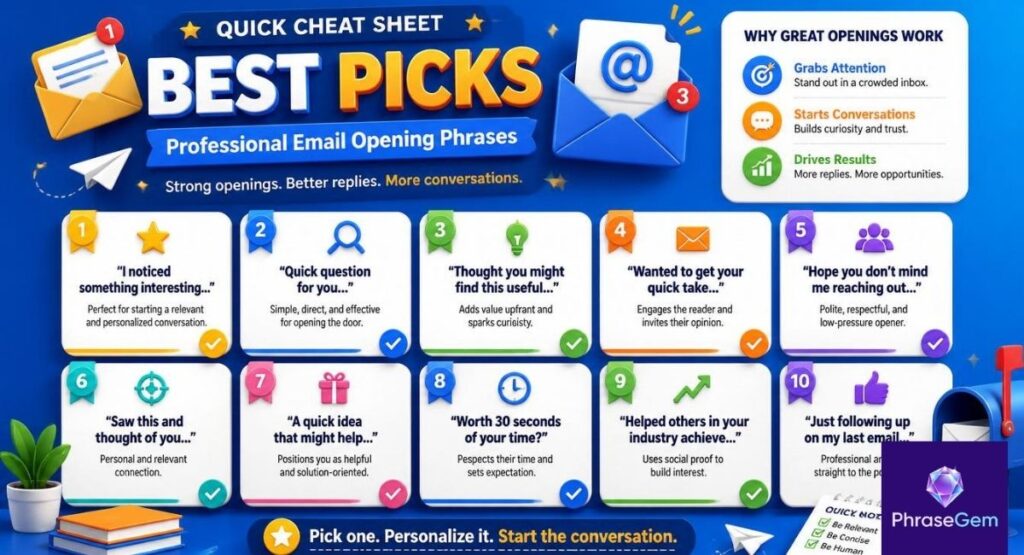
Match your opener to the moment:
| Situation | Best Opener |
| First time emailing | “I hope this message reaches you at a good time.” |
| Reconnecting | “I hope you’ve been doing well.” |
| Casual colleague | “I hope you’re doing great.” |
| Formal or corporate | “I trust you’re doing well.” |
| Monday morning | “I hope you’re starting your day on a good note.” |
| Mid-week check-in | “I hope you’re having a productive week.” |
| Keeping it short | “I hope you’re well.” |
Bonus Section: Short Polite Email Openers
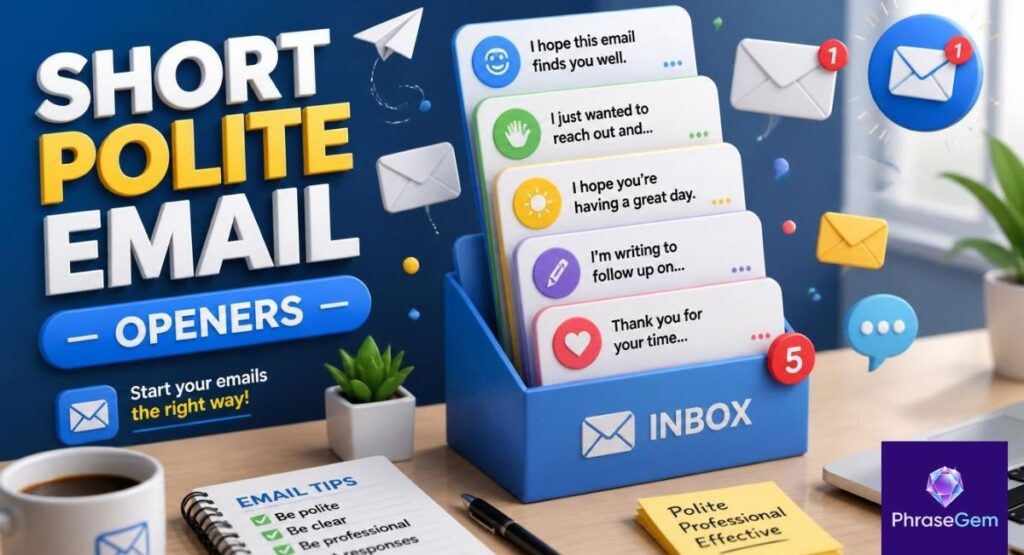
Sometimes one line is all you need. These are clean, quick, and human:
- “Good to connect with you.”
- “Thanks for making time.”
- “Jumping straight in with some good news.”
- “Quick one from my end.”
- “Really appreciate you reading this.”
Short openers work especially well in mobile emails where people skim fast.
Final Writing Tips
A great email opener is natural, specific, and fits the moment.
- Write like you talk, not like a formal letter from 1995
- Skip the filler and get to your point faster
- Change your opener based on who you are writing to
- Read your first line out loud before sending it
- If it sounds robotic, rewrite it
The best opener is one the reader actually notices.
Frequently Asked Questions
What does “Hope this email finds you well” mean?
It is a polite way to greet someone at the start of an email. It simply means you hope they are doing okay.
Is “Hope this email finds you well” too overused?
Yes, it is one of the most overused email openers today. Most people skip right past it without even reading it.
What can I say instead of “Hope this email finds you well”?
You can say things like “I hope you’re doing great” or “I hope you’re having a good week.” Keep it short and real.
Is it okay to use “Hope this email finds you well” in a professional email?
It works, but it does not stand out. A more specific opener will make a much better first impression.
How do I start a professional email without sounding boring?
Skip the generic opener and lead with something relevant or specific. For example, mention their name, a recent project, or get straight to the point.
What is a casual way to start an email?
Try “Hope you’re doing well” or “Good to connect with you.” Short and friendly always works better than long and formal.
Can I just skip the greeting and go straight to the email body?
Yes, you can, especially in short or internal emails. Getting straight to the point can actually feel more respectful of their time.
What is the best email opener for cold outreach?
Lead with value, not pleasantries. Something like “I noticed you’re working on X and wanted to share something useful” works much better.
How do I start an email to someone I have not talked to in a long time?
Try “I hope you’ve been doing well” or “It’s been a while, hope everything is great on your end.” It feels warm without being awkward.
What is the best way to start an email in 2026?
Be human, be specific, and skip the copy-paste openers. A fresh and genuine first line gets read. A generic one gets ignored.
Read Next: ASF Meaning in Chat: What It Really Means (With Real-Life Examples & Usage Guide)

Elliot Fairmont is a language enthusiast and content writer at PhraseGem.com with a passion for making English easier to understand. He specializes in English grammar, phrases, vocabulary, text slang meanings, and everyday communication. Through clear explanations and practical examples, Elliot Fairmont helps readers improve their language skills, expand their vocabulary, and communicate with greater confidence in both personal and professional settings.
When he’s not researching language trends and writing educational content, Elliot Fairmont enjoys reading, exploring modern communication styles, and discovering new ways to make learning English simple and engaging.